 by Jian Bai, Bachelor of Science student at The University of Melbourne and In2science Mentor
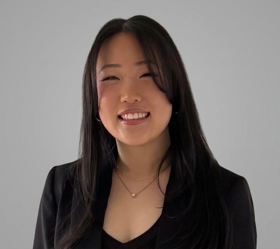
My name is Jian, and I am currently a second-year Bachelor of Science student at The University of Melbourne, majoring in Mechanical Engineering Systems. I applied as a mentor for In2science at the start of this year as I wanted to develop my communication skills and to promote STEM to high school students. Later, I signed up for the Mentor Leaders Program as I wanted to learn more about what life beyond university is like, and pathways available after graduating.
My mentor, Dr. Mahta Mansouri, is a Research Officer at the Walter and Eliza Hall Institute of Medical Research (WEHI), working on small molecule design and synthesis for drug discovery. Despite our different disciplines, I have realised that there are many similarities between most careers in STEM; being able to collaborate with others and network well are both essential skills to practise. Another idea I found helpful is that the work you do within similar roles can vary a lot between organisations, and considering how your personality meshes with the company culture is even more important than I thought.
I had the opportunity to visit WEHI Parkville recently, where Mahta gave me a tour of the research facilities on level 7, where she w orks, and level 4. Although I know very little about chemistry, it was still so interesting to see all the glassware on the benches and in the fume hoods, just like in movies. My favourite part was when we went to a room with all the analytical instruments (shown in the photo), such as a microwave synthesizer and chromatography machines, as well as a special room for an NMR spectrometer (which Mahta mentioned wasn’t particularly strong despite its size!).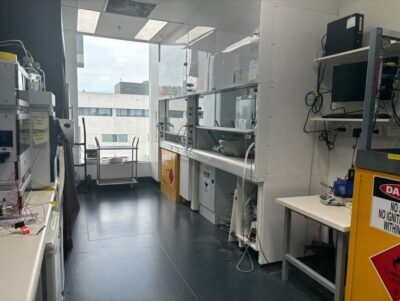
It was fascinating to see how the techniques we learn in first-year chemistry electives, like using UV lamps for chromatography, can be applied in professional labs. Learning about how technology can be used to determine the structure of a compound was especially intriguing as I hadn’t realised this was possible before! Mahta also explained how drug discovery actually works using a funnel diagram. This reinforced her point in all our earlier meetings that soft skills, such as patience, resilience, and collaborative problem-solving, are vital in research and any technical career.
Despite my visit being late in the day, I still got to meet some of Mahta’s friends who stayed behind. It was great to hear about their work, especially seeing how their various research areas complement each other. Talking with them also gave me a sense of how supportive and welcoming the team culture is across the entire organisation.
Overall, visiting WEHI was an incredible experience that gave me a much clearer picture of what it’s like to work in a research environment. It has given me a lot to think about as I consider my own pathway after university!