From Pollen to Pokémon: Kira Hughes’ STEM Adventure Inspires Mentors

By Events, News

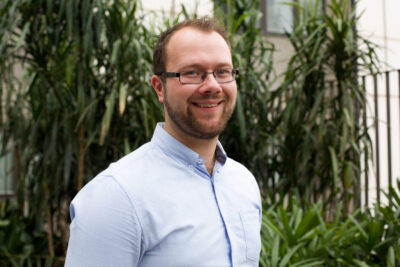
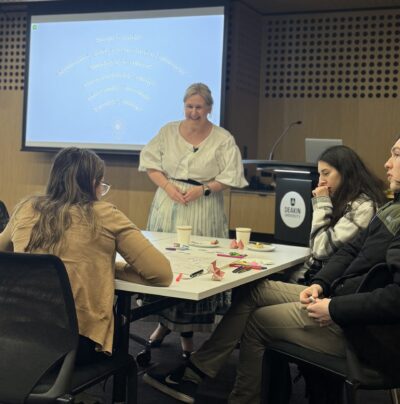
The In2science mentors were treated to another stellar webinar this week—this time featuring the endlessly impressive Dr Kira Hughes, Research Grants Officer at the Peter MacCallum Cancer Centre. Kira began with an overview of her fascinating PhD research into thunderstorm asthma. He project involved developing highly sensitive pollen sensors, investigating how pollen and the environment interact to cause asthma, and training AI to identify different pollen species. We also have Kira to thank for pollen forecasting apps, which hay fever sufferers are very grateful for, especially at this time of year! Kira is also a talented science communicator, appearing on tv, radio, and podcasts. She creates content by blending her enduring love of video games with her passion for STEM by using Pokémon to explain complex science concepts. Impressively, she has also delivered a TedX talk, and performed at the Melbourne International Comedy Festival!

Kira has accomplished much in her career, and she explained how it all began with a chance encounter with a Deakin University student who encouraged her to pursue a Bachelor of Biomedical Science. From there, her path zig‑zagged in wonderfully unexpected ways. She navigated roadblocks—including COVID‑19 hitting right at the start of her Honours year—yet each challenge pushed her toward new opportunities. Hearing how a non‑traditional journey led to such remarkable success was both refreshing and reassuring for our mentors. Kira encouraged the mentors to seek out diverse opportunities as you never know what you will learn or where they will lead. She also reinforced the importance of considering all their transferable or translatable skills – ones that can be learnt anywhere, from casual retail work to volunteering roles like In2science. Kira’s presentation was insightful and inspiring, and we look forward to seeing where her curiosity takes her next.

Connecting Futures: In2science Mentors Dive Into STEM Career Speed‑Networking

By Events, News

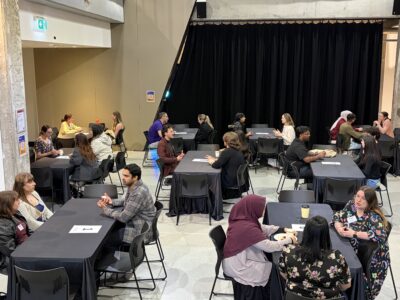
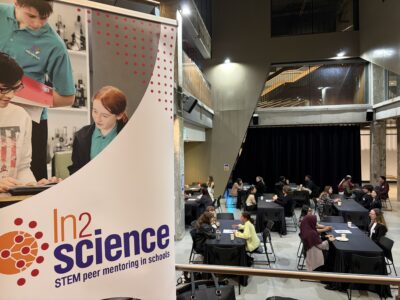
On Tuesday September 22, In2science welcomed our 2026 mentors to our Career Speed‑Networking Event—an evening designed to spark curiosity, build confidence, and open doors to the many futures waiting in STEM. Twelve brilliant STEM professionals joined us at the RMIT University Media Portal for this exciting event. Guests from organisations including Teach For Australia, GSK, The University of Melbourne, Defence Science and Technology Group, CSL, Plants For Space, WEHI, Thermo Fisher Scientific, Museums Victoria, AKD, and Science Gallery Melbourne gathered with one shared purpose: to share their experience with university students looking for that next step after study.

The night began with a warm welcome from Director Dr Cory Smith, setting the tone for an event full of connection and discovery. Guests then joined a lively icebreaker activity, debating whether quirky STEM statements were true or false. Then came the main event: speed‑networking. For seven minutes at a time, mentors sat face‑to‑face with each professional, diving into conversations about career journeys, unexpected pivots, and the realities of life after university. The conversation flowed easily as mentors soaked up advice from people who’ve carved out their own unique STEM paths.

In2science mentor Sahiti, who is completing a PhD in food science at La Trobe University, captured the spirit of the evening perfectly: “Learning from such incredible and diverse professionals was truly inspiring. Connecting with them opened my eyes to the vast range of career pathways within STEM and helped me appreciate the many different ways I can make an impact through my work.”

From the other side of the table, Museums Victoria’s Catriona Nguyen-Robertson reflected on the joy of connecting across generations: “Being a mentor in the In2science program was really a kick-starter for me in STEM education, and I want to give back however I can and empower current mentors to be successful in their chosen paths too!”

Mentor Mackenzie, a Bachelor of Science student at The University of Melbourne, also found a powerful thread running through the night: “It was really valuable for me to hear everyone’s career journeys, as I found a common message from each of them that stuck with me throughout the evening.”

Events like this are among our favourites at In2science. They give mentors something rare and invaluable: the chance to speak directly with a diverse group of STEM professionals who are generous with their stories, honest about their challenges, and passionate about helping others find their way. We are so grateful to the professionals who gave up their time to share their stories and look forward to hosting our next networking event in the near future.

STEM Career Wisdom from Dr Will Sullivan

By Events, News

Our brand-new webinar series continued this week with an inspiring presentation from Dr Will Sullivan. Will is the Assistant Director of STEM Outreach and Engagement at the Defence Science and Technology Group (DSTG), Department of Defence. Will is also a long-time member of the In2science family from his years as RMIT Program Coordinator. It was a pleasure to welcome him back and hear about his winding, relatable journey into STEM. Will shared how he once felt unsure about his direction after high school – something that many of us can identify with! Will discovered a love of food science and studied a Bachelor of Science (Food Technology and Nutrition) at RMIT University, followed by a PhD in Food Chemistry. He spent some time teaching scientific skills to students in China, which sounded like a very exciting experience. Will also spoke about the work he currently does at DSTG, where he is heavily involved in the STEM talent pipeline through events and graduate programs.

Will had lots of thoughtful and practical advice for our mentors. He emphasised the importance of saying yes to new experiences, but also knowing when to say no to avoid negative impacts like burnout. He spoke about the importance of a work/life balance and finding ways to relax while studying. He also encouraged our mentors to build their networking skills, as this is a great way to meet people in different fields, to learn from the experience of others, and to uncover new opportunities. Will has had a fascinating career so far and we’re grateful he shared his wisdom with our mentors.

Fuel, Fire and Forensics: Anastasia Bickley Lights Up Our Latest Webinar

By Events, News

On Thursday August 20, In2science hosted the third in our new series of fascinating webinars. Our presenter was Anastasia Bickley, who is currently in the first year of her PhD at Deakin University. Anastasia is also one of our most committed mentors, having completed four placements at Bellarine Secondary College. Anastasia enthusiastically shares her love of forensic science with her mentees, often bringing in demonstrations and telling stories of real-world applications of this discipline.

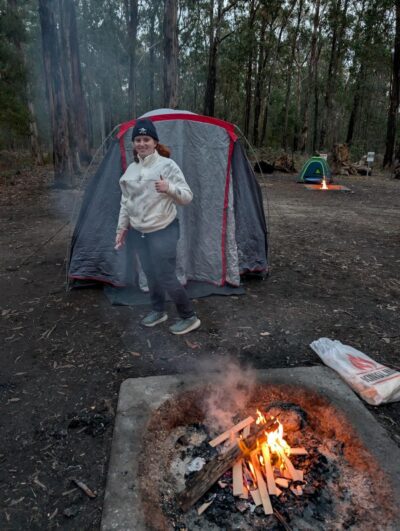
Anastasia’s goal is to update arson research and help to make it less time sensitive. She explained how the longer the time is between gathering evidence from a fire and analysing it, the less accurate that information will be. She is focused on bushfires and how campfires can lead to them, concealment of accelerants, and what leads people to not follow the laws surrounding safe fire lighting. During her field work, she was able to locate evidence of past fires, both legal and illegal, and took samples to identify the fuel used. Her methods have led to quicker and more accurate identification of accelerants used, particularly in illegal fires which could potentially cause disastrous bushfires.

Anastasia captivated the crowd with her results and a glimpse into her PhD ambitions. The In2science team can’t wait to see what discoveries she makes next!

Mentors Go Interstellar: Exploring Space‑Ready Plants in our Second Webinar

By Events, News

On Thursday July 14, our mentors tuned in for the latest instalment of our webinar series, this time hearing from Frazer Thorpe, Education and Engagement Manager for the ARC Centre of Excellence in Plants for Space, based at La Trobe University. Frazer gave mentors an engaging overview of Plants for Space and the outreach work they do across schools to provide students and teachers with ways to connect to the research work being done. Mentors learnt how the team brings a futuristic, yet grounded, vision of space science into the classroom by exploring the science of growing food in space, learning what it takes to sustain human life beyond Earth and how those lessons can be applied to our own agricultural processes.


It was a fascinating look at how big questions about space can be brought back down to something very immediate and relatable: what we eat, and why it matters. We finished off the session with a great Q&A, with our mentors keen to dig deeper into Frazer’s work. Our mentors relished the opportunity to learn about another STEM outreach program, reminding us of the importance of the work here at In2science and understanding how we all link together to build student STEM aspiration and engagement.


We’re looking forward to sharing more from our speaker line-up in the months ahead, so stay tuned for what’s coming next!

In2science Launches New Webinar Series for Mentors

By Events, News

Our hard-working volunteer mentors are the heart of In2science, and finding ways to thank them for their commitment to the program is incredibly important to us. We decided we wanted to give something meaningful back. The result? A brand‑new, free online webinar series created especially for them.

Once a month, mentors will have the chance to hear from an inspiring guest speaker—leaders from STEM industries, academics from our four partner universities, and experts offering professional development workshops. There’s even space for our postgraduate mentors to step into the spotlight and share their own research with their peers.

We launched the series on Thursday June 18 with a lively first session titled “Get to Know In2science!” Mentors from across our partner universities learnt all about the story of In2science—from its beginnings in 2004 to the dynamic, state-wide program it is today. Each team member introduced themselves, sharing their career paths, quirks, and passions beyond the office. The In2science team are an eclectic bunch—Deakin University Coordinator Tordy taught maths in Dubai for two years, and The University of Melbourne’s Marie is a bit of a thrill seeker, spending her weekends windsurfing. La Trobe University Coordinator Rachel is a devoted Pink fan (and a somewhat devoted Essendon Football Club fan), while Rany from RMIT University originally trained as a journalist, hoping to become a travel writer. And in true In2science fashion, pets featured prominently in the presentation, with eMentoring Coordinator Rhonda’s cat Dash making a special appearance!

Reflecting on the new initiative, In2science Program Manager Dr Nicole Butler said, “We recognise the massive contribution that our volunteers make, sharing their passion for STEM with their high school student mentees. Hosting a free webinar series is a small way that we can give back to them. It provides the mentors an opportunity to meet people working in industry and academia, and to upskill with professional development workshops.”

With such an enthusiastic start, this webinar series is shaping up to be an insightful new way for mentors to learn, connect, and feel celebrated. We’re excited to share our incredible line-up of speakers with mentors in the months ahead.


Celebrating our Mentors with a bit of Friendly Competition

By Events, News

National Volunteer Week is a time to recognise the incredible contribution of volunteers across Australia, and at In2science, we couldn’t let the week pass without celebrating the heart of our program — our dedicated volunteer mentors. This year, we brought together mentors from all four of our partner universities for an online STEM‑themed trivia night, created and hosted by the In2science team. For one evening, the team stepped away from their usual roles to become Quiz Masters, all the while encouraging a bit of friendly competition among the participants.

We kicked off with a quiz inspired by the wonderfully quirky Ig Nobel Prizes — awards that honour research that first makes you laugh, then makes you think. From unusual experiments to unexpected discoveries, mentors were challenged to identify the research findings of Ig Nobel prize winners from the last ten years. Congratulations to Annam, Deakin University mentor, who took out first place in this round! Next up was a puzzle designed by Deakin University Coordinator Tordy, where mentors had 15 minutes to decipher which famous scientists were represented by strings of emojis. This round proved to be the trickiest of the night, but La Trobe University mentor Sayuni rose to the challenge and claimed the win. To finish, the team presented a classic “What am I?” challenge, where participants used a series of clues to identify an object or item. This round sparked some of the most creative and entertaining guesses of the evening. Lenna, another La Trobe University mentor, came out on top — well done, Lenna!

In2science Program Director Dr Cory Smith said, “Trivia Night gave us an opportunity to thank our mentors for the amazing work they do for In2science, and it was fantastic to see such a good turnout with everyone having a great time – even if some of the questions were fiendishly tricky!” The In2science team would like to say a huge thank you to everyone who joined us at this event. We hope you had as much fun participating as we did creating the quizzes. Most importantly, thank you to all our incredible mentors. Your enthusiasm, generosity, and commitment make In2science possible, and we appreciate everything you do.

In2science Awards Night 2025 – highlights from turning 21!

By Awards, Events, News

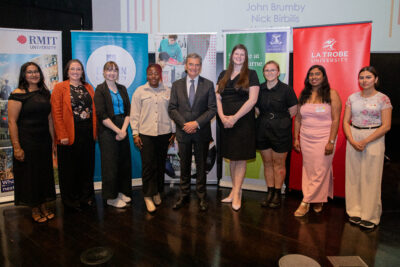
On Tuesday December 9, In2science staff, participants and esteemed guests gathered at the Ian Potter Auditorium at The University of Melbourne to celebrate another successful year of In2science. Everyone was dressed up and ready to have a fun night – after all, it’s not every day you turn 21!


Video by Social Moments by Willow

In2science Director Dr Cory Smith opened the ceremony with an Acknowledgement of Country and spoke passionately about the importance of STEM in everyday life – even in activities like baking and rock climbing! In2science Chair, the Honourable Professor John Brumby AO, echoed Cory’s sentiments and thanked all who had participated in In2science in 2025 – our Board Members, funding bodies, past and present staff, and of course the teachers, mentors and mentees that make this program so fantastic. Keynote speaker Dr Kira Hughes, from the Peter MacCallum Cancer Centre, gave an inspiring speech about her own personal STEM journey and the importance of role models, something that resonated with all of our participants.


The awards themselves began with recognition of the teachers and schools that went above and beyond to create welcoming, supportive environments for mentors and students. The Mentor Support Teacher Award went to Leanne Kirkland from Sale College, and Danielle McLeod from Epping Secondary College. Leanne’s effort in bringing the eMentoring program to her school was outstanding and the Coordinators found her so easy to work with. Danielle was recognised for her ongoing encouragement of her mentor Emma, giving her lots of freedom in the classroom. Our joint winners of the School Engagement Award were Ballarat High School and Doveton College. Ballarat High School has been an In2science partner since 2011 and are always so keen to be involved in our eMentoring program. Doveton College provides a welcoming environment for our mentors and the teachers at this school are a joy to work with. We also had a special Outstanding Contribution Award this year, which was awarded to Jennifer McCarthy from Bellarine Secondary College. Bellarine was the first school to host both in-class mentors and eMentors in an official capacity, and that was all thanks to Jen’s tireless dedication.


We were thrilled to award four high school student mentees with the Outstanding Mentee Award. It was a tough field this year, with 10 amazing finalists. Our winners were Willa Curnow from Sale College, Xavier Everett from Galen Catholic College, Charlie Gorman from Matthew Flinders Girls Secondary College, and Jacob James from Bundoora Secondary College. We want to recognise the growth these mentees have shown during their time working with their In2science mentors and encourage them to continue to engage with STEM long into the future. We then heard from our next speaker, award-winner Willa Curnow. Willa spoke with confidence and grace about the two mentors she had the opportunity to work with while in the eMentoring program. We loved hearing about how her mentors Srishti and Anmol taught her more about their shared interest, psychology, and about university life.


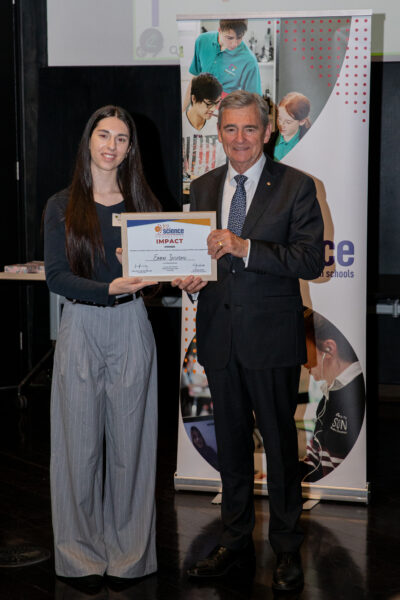
The mentor awards followed, and we had a fabulous pool of finalists to choose from this year, making our decisions very difficult! The STEM Champion Award was given to Erisha Tayal of The University of Melbourne. Erisha was recognised for her enthusiasm and work to inspire her students, especially the girls, to enter a STEM field. We awarded the Connection Award to Ella Jalland from Deakin University, due to her outstanding ability to engage with mentees at any level and use humour to make STEM fun. The Impact Award was given to Emma Iacuone from La Trobe University. Emma already has such a busy schedule, but she always has time for In2science mentoring and is kind and patient with her students. Tanvi Shaikh from RMIT University was awarded the Dedication Award due to her commitment to her placement across both semesters of 2025, and her endless enthusiasm for STEM.


Finalists for the Mentor Leaders Program, which connects In2science university student volunteers to their own mentor working in industry, were tough to narrow down as we had so many wonderful mentor-mentee pairs this year. Nadia Niyubushobozi from Deakin University won the award, as she wholeheartedly embraced the aims of the program in her meetings with her mentor, Dr Kira Hughes. In her summary, Kira praised Nadia’s kindness and determination, and her desire to continue to help others achieve their goals. We concluded the awards presentation with two eMentor awards. First up, Thisanja Cooray from La Trobe University was given the Regional Impact Award for her outstanding work as an eMentor in 2025. Thisanja truly does go above and beyond for her mentees, organising to meet up at university open days and teaching them hands-on scientific techniques. Aleeta Carmody from Deakin University was awarded the Regional Connection Award. Aleeta has been an eMentor for two years and always develops a strong rapport with her mentees. She is a big supporter of In2science and we love working with her!


We finished up the ceremony with a fabulous speech from Mackenzie Liddell, a Bachelor of Science student at The University of Melbourne and finalist for the Connection Award. Mackenzie spoke about her time as a mentor at Pakenham Secondary College and the fun activities she had the opportunity to participate in, like an excursion to Cranbourne Gardens. Mackenzie’s inspiring speech was a wonderful way to wrap up the official presentation. It’s always a joy to host this fabulous event and get the opportunity to hear about how much our participants enjoy being part of the program. The In2science team is looking forward to an even bigger and better year in 2026!


Click here to read more about the 2025 Awards winners and finalists

Click here to access the 2025 Awards Photo Gallery


In2science is grateful for the generous support of our Program partners: the Department of Education Victoria, the Department of Industry, Science and Resources, and the Selby Scientific Foundation.


Relationship Building – a key skill for mentoring and beyond

By Events, News

With the end of semester 2 rapidly approaching, the In2science team hosted our second mentor professional development workshop for the year. We love offering free workshops on a variety of topics to give back to our hard-working volunteers. This time, we headed to RMIT’s impressive Storey Hall and enjoyed the sweeping views of the CBD (albeit on a rather gloomy day). We were lucky to host two guest speakers from Teach for Australia, a proud partner of In2science. Senior Recruitment Manager Costa Constantaras and colleague Varun Asthana delivered a humorous and insightful presentation all about relationship building.

While mentoring, our volunteers foster relationships with a diverse range of people – from their host teachers, to the In2science team, to their high school student mentees. In their future careers in STEM they may need to connect with lecturers, research heads, supervisors, managers, and colleagues. Recognising what each different relationship needs can be tricky and requires specific skills. Costa led the attendees through a discussion of relationship-building skills like showing respect, practising empathy and being open-minded. Our mentors were encouraged to put their skills into practice by learning about each other through meaningful conversations and active listening.

Our attendees learnt a lot from the workshop and appreciated the opportunity to ask questions about the relationships they are cultivating with their mentees. It was great to see the mentors sharing their own experiences and helping each other to problem solve. In2science would like to thank Teach for Australia for helping us to organise this workshop, and we look forward to bringing more professional development events to our mentors next year.

From Neurodiverse to Neuroaware: Mentors Upskill with a Neuroinclusive Workshop

By Events, News

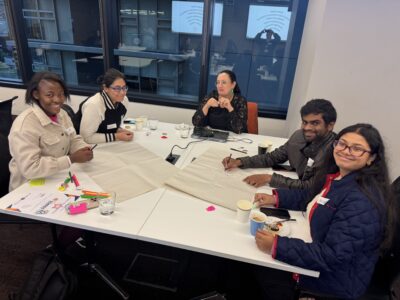
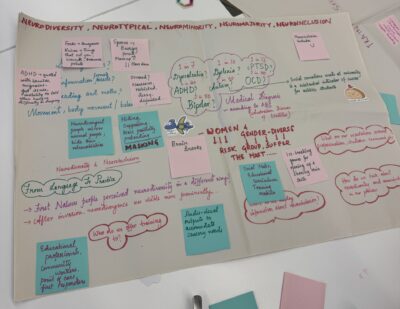
On Wednesday May 28, the In2science team and volunteer mentors from our partner universities gathered at beautiful Deakin Downtown for a professional development workshop. Presented by the amazing Dr Rebecca (Bec) Muir, manager of Disability and Neurodiversity Inclusion at La Trobe University, this interactive, fun, and occasionally challenging workshop explored our perceptions of neurodiversity and gave practical advice on how we can all be more neuroinclusive in our day-to-day lives. We asked our fabulous attendees to share their thoughts on the event.

eMentor Gracy Arora from Deakin University, who is currently working with a student from Maffra Secondary College, had this to say about the experience:

“As an international student living in Australia for the past two years, I’ve often found it challenging to truly feel at home. However, during the two-hour neuroinclusion training session led by Dr Rebecca, I experienced a profound sense of belonging and understanding that I had not felt before. The session was incredibly enlightening—it introduced me to concepts I had never encountered and shifted my perspective in powerful ways. Dr Rebecca’s delivery was thoughtful, clear, and deeply impactful. The safe, respectful environment she cultivated made everyone feel seen and heard, and for the first time in a long while, I felt equal and included. Coming from a psychology background, I’ve sometimes struggled to fully grasp how neuroinclusion should be practiced in everyday settings. This session not only clarified those gaps but also gave me the confidence to approach these topics with greater sensitivity and awareness. I walked away with a new language of inclusion and a greater appreciation for the small, often overlooked actions that can make a big difference. It was a truly eye-opening experience, and I am immensely grateful to have had the opportunity to participate.”
La Trobe Masters student and eMentor, also at Maffra Secondary College, Kajanan Sathiyaseelan shared these insightful words:

“Looking back, I have learned a lot as an eMentor from explaining science to kids who are hungry for knowledge to being their friend and sharing my struggles as a neuroatypical person in my academic journey. I had the amazing opportunity to attend a lecture by Rebecca Muir on neurodiversity. She broke down the phobia that society often holds about neurodiverse people. What they really need is love and support from fellow humans, along with a safe space to express themselves and just be themselves. Inclusion is a simple step. We need to stop fearmongering, start loving, and treat everyone as our fellow humans. As a neuroatypical person, I understand the struggles of those who share my spectrum. Be the change.”

Emma Iacuone, also from La Trobe University and mentoring at Epping Secondary College, offered her thoughts:

“I had the amazing opportunity to attend the ‘Neuroinclusion in practice and language’ workshop presented by the lovely Dr. Rebecca Muir! I got to meet with other mentors and eMentors from the program, where we learnt together about neuroinclusive language, and what being neuroinclusive in a classroom setting can look like. The biggest idea I took away from the workshop was that each person has different needs, and that when I am in the classroom, it is a good thing to ask all students about what they prefer. This reduces the assumption that neurodivergence is uncommon, and I can change how I share information or explain concepts to students with different learning styles. I felt the workshop atmosphere was extremely supportive, fun (I learnt how to fold an origami chatterbox!), and informative. I wanted to say thank you to the In2science team for the opportunity to be a part of this workshop!”
Lenny Zhang, an eMentor from The University of Melbourne mentoring at St John’s Regional College, said the following:

“As someone who hates stepping out of their comfort zone, pushing myself to come to this workshop was a challenge although I knew it was going to help me to expand my knowledge in an unfamiliar field. However, this challenge took me by surprise. I had learnt knowledge, theories and ideas that I was unprepared for yet desperately needed. As a psychology student, I have often heard of the words neurodiverse and neurodivergent, but I never understood the difference between them. I also felt a deep connection with the cutlery theory, which articulated why we may react differently to the big and small stressors in everyday life. I felt welcomed, accepted and respected. Small fidgets were provided that could suit people’s learning needs, as some of us, such as me, learn better with a certain level of “distraction”. We were given multiple breaks to refuel our bodies and let our concentrated minds rest. Before we knew it, Dr Rebecca Muir has made the workshop more than a classroom that taught us about neurodiversity, but also a place that demonstrated how to create a safe space that respected the differences between people.”

One of our favourite aspects of In2science is being able to give back to our hard-working and committed volunteers with these exceptional professional development workshops. Our mentors learnt so much from Bec and have upskilled not only their mentoring, but their everyday interactions with diverse people. We would like to extend a heartfelt thank you to Bec for running this fantastic workshop sharing her extensive knowledge about becoming more neuroaware!