On Tuesday December 9, In2science staff, participants and esteemed guests gathered at the Ian Potter Auditorium at The University of Melbourne to celebrate another successful year of In2science. Everyone was dressed up and ready to have a fun night – after all, it’s not every day you turn 21!
Video by Social Moments by Willow
In2science Director Dr Cory Smith opened the ceremony with an Acknowledgement of Country and spoke passionately about the importance of STEM in everyday life – even in activities like baking and rock climbing! In2science Chair, the Honourable Professor John Brumby AO, echoed Cory’s sentiments and thanked all who had participated in In2science in 2025 – our Board Members, funding bodies, past and present staff, and of course the teachers, mentors and mentees that make this program so fantastic. Keynote speaker Dr Kira Hughes, from the Peter MacCallum Cancer Centre, gave an inspiring speech about her own personal STEM journey and the importance of role models, something that resonated with all of our participants.
 The awards themselves began with recognition of the teachers and schools that went above and beyond to create welcoming, supportive environments for mentors and students. The Mentor Support Teacher Award went to Leanne Kirkland from Sale College, and Danielle McLeod from Epping Secondary College. Leanne’s effort in bringing the eMentoring program to her school was outstanding and the Coordinators found her so easy to work with. Danielle was recognised for her ongoing encouragement of her mentor Emma, giving her lots of freedom in the classroom. Our joint winners of the School Engagement Award were Ballarat High School and Doveton College. Ballarat High School has been an In2science partner since 2011 and are always so keen to be involved in our eMentoring program. Doveton College provides a welcoming environment for our mentors and the teachers at this school are a joy to work with. We also had a special Outstanding Contribution Award this year, which was awarded to Jennifer McCarthy from Bellarine Secondary College. Bellarine was the first school to host both in-class mentors and eMentors in an official capacity, and that was all thanks to Jen’s tireless dedication.
We were thrilled to award four high school student mentees with the Outstanding Mentee Award. It was a tough field this year, with 10 amazing finalists. Our winners were Willa Curnow from Sale College, Xavier Everett from Galen Catholic College, Charlie Gorman from Matthew Flinders Girls Secondary College, and Jacob James from Bundoora Secondary College. We want to recognise the growth these mentees have shown during their time working with their In2science mentors and encourage them to continue to engage with STEM long into the future. We then heard from our next speaker, award-winner Willa Curnow. Willa spoke with confidence and grace about the two mentors she had the opportunity to work with while in the eMentoring program. We loved hearing about how her mentors Srishti and Anmol taught her more about their shared interest, psychology, and about university life.
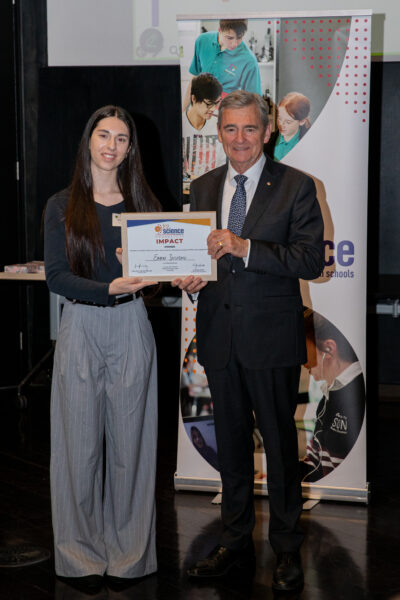
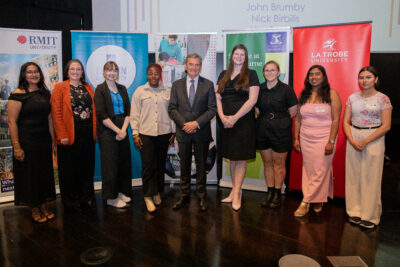 The mentor awards followed, and we had a fabulous pool of finalists to choose from this year, making our decisions very difficult! The STEM Champion Award was given to Erisha Tayal of The University of Melbourne. Erisha was recognised for her enthusiasm and work to inspire her students, especially the girls, to enter a STEM field. We awarded the Connection Award to Ella Jalland from Deakin University, due to her outstanding ability to engage with mentees at any level and use humour to make STEM fun. The Impact Award was given to Emma Iacuone from La Trobe University. Emma already has such a busy schedule, but she always has time for In2science mentoring and is kind and patient with her students. Tanvi Shaikh from RMIT University was awarded the Dedication Award due to her commitment to her placement across both semesters of 2025, and her endless enthusiasm for STEM.
Finalists for the Mentor Leaders Program, which connects In2science university student volunteers to their own mentor working in industry, were tough to narrow down as we had so many wonderful mentor-mentee pairs this year. Nadia Niyubushobozi from Deakin University won the award, as she wholeheartedly embraced the aims of the program in her meetings with her mentor, Dr Kira Hughes. In her summary, Kira praised Nadia’s kindness and determination, and her desire to continue to help others achieve their goals. We concluded the awards presentation with two eMentor awards. First up, Thisanja Cooray from La Trobe University was given the Regional Impact Award for her outstanding work as an eMentor in 2025. Thisanja truly does go above and beyond for her mentees, organising to meet up at university open days and teaching them hands-on scientific techniques. Aleeta Carmody from Deakin University was awarded the Regional Connection Award. Aleeta has been an eMentor for two years and always develops a strong rapport with her mentees. She is a big supporter of In2science and we love working with her!
 We finished up the ceremony with a fabulous speech from Mackenzie Liddell, a Bachelor of Science student at The University of Melbourne and finalist for the Connection Award. Mackenzie spoke about her time as a mentor at Pakenham Secondary College and the fun activities she had the opportunity to participate in, like an excursion to Cranbourne Gardens. Mackenzie’s inspiring speech was a wonderful way to wrap up the official presentation. It’s always a joy to host this fabulous event and get the opportunity to hear about how much our participants enjoy being part of the program. The In2science team is looking forward to an even bigger and better year in 2026!
Click here to read more about the 2025 Awards winners and finalists
Click here to access the 2025 Awards Photo Gallery

In2science is grateful for the generous support of our Program partners: the Department of Education Victoria, the Department of Industry, Science and Resources, and the Selby Scientific Foundation.
 On Thursday July 14, our mentors tuned in for the latest instalment of our webinar series, this time hearing from
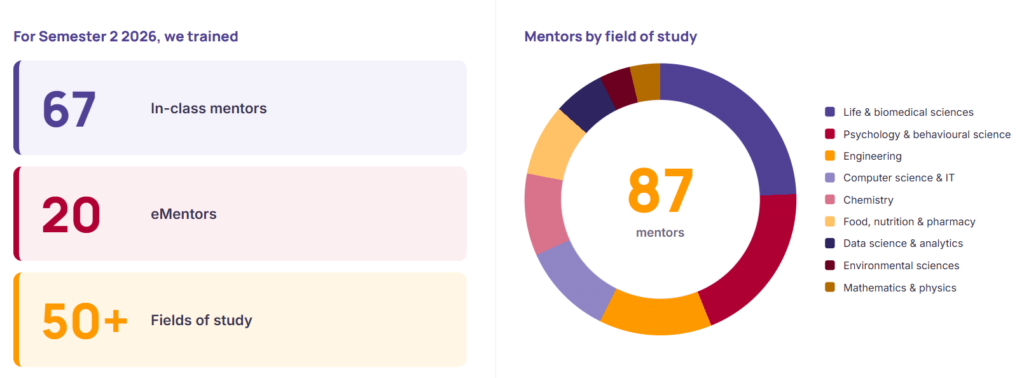
 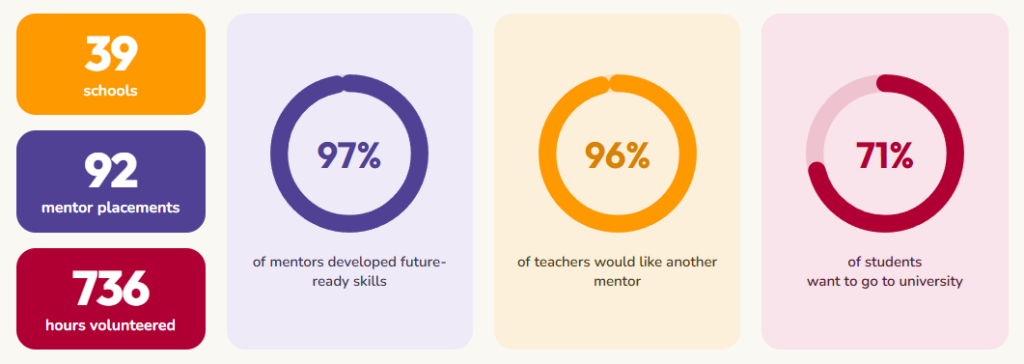 With the winter school holidays just beginning, Semester 1 placements have wrapped up at In2science. Across Victoria, mentors stepped into classrooms or logged on to online sessions with enthusiasm, courage, and a genuine desire to make STEM feel achievable for every student they met. With an incredible 92 placements across 39 schools, it has been a very successful start to mentoring in 2026.
 Our hard-working volunteer mentors are the heart of In2science, and finding ways to thank them for their commitment to the program is incredibly important to us. We decided we wanted to give something meaningful back. The result? A brand‑new, free online webinar series created especially for them.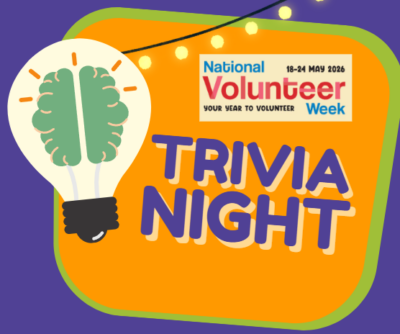
 Quantum Victoria
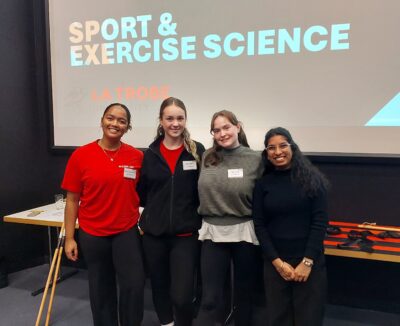 One of the standout sessions was an energetic workshop on exercise science, led by La Trobe students Jamie‑Lee, Hayley and Bree, alongside In2science mentor Sneha. The room quickly transformed into a mini physiotherapy clinic as students tested their mobility with lunges and squats while their peers assessed technique. This gave the students a glimpse into the real-life experience of a career in sports science.
 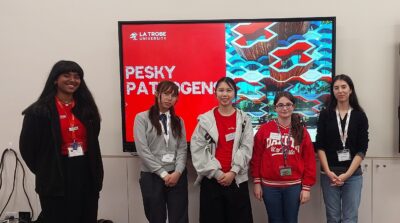 The second La Trobe-led session, “Pesky Pathogens”, took students into the microscopic world of infectious disease. STEM students Gihansa, Hayley, Lenna, and In2science mentors Mei and Emma, guided the students through a simulation of how easily disease is spread and what we can do to prevent this. A mix‑and‑match activity helped students link common diseases to the organisms that cause them. The presenters shared their own pathways into university and their study interests, and discussed how an interest in pathogens can lead to a variety of careers.
 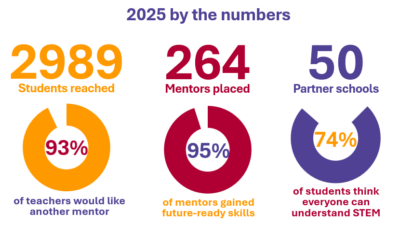 Building on an incredible 2025, In2science has launched into Semester 1, 2026 with fresh momentum and a growing community. This year, we’re thrilled to welcome three new partner schools and an enthusiastic cohort of mentors from across our four partner universities. Each mentor brings their own lived experience, passion for STEM, and commitment to helping students see what’s possible. To capture the excitement of these first few weeks, we asked some of our newest mentors how their early sessions have been—and their reflections say it all.