Semester 2 Wrap-up: In2science Mentors Reflect on their Best Moments

By Mentor stories, News

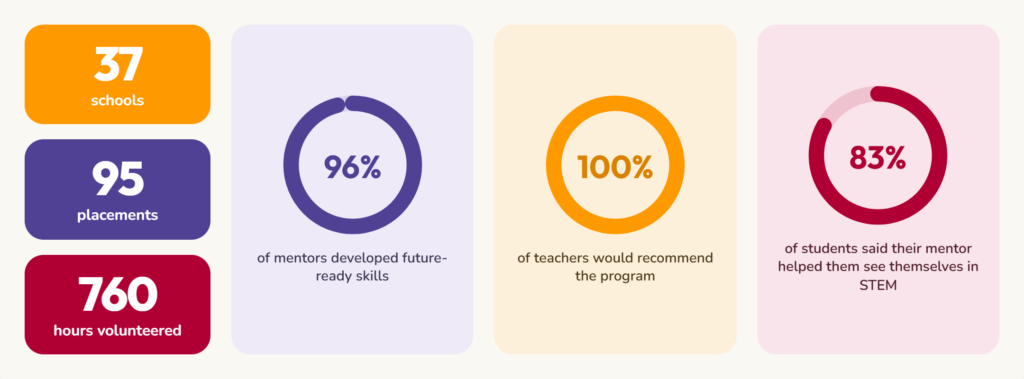
The end of 2026 is just around the corner, and at In2science that means semester 2 placements are wrapping up. Our mentors have spent the last few months sparking curiosity, building confidence, and showing students that STEM is a world they can belong to. At In2science we are extremely grateful to the mentors, teachers, and students that participate in In2science and bring enthusiasm and a passion for STEM to each session. In Semester 2, In2science hosted 95 placements across 37 schools, engaging with over 1400 students. As we close out 2026, the In2science team is excited to celebrate everything this community has achieved together.

To capture the spirit of the semester, we asked some of our dedicated mentors to share the best thing about their experience.

Fazeela, an eMentor from Deakin University, reflected on the joy of connection: “Getting to know my mentee has been a delight. She is a bright and confident student, and I feel happy to be providing guidance to her.”

For Bella from The University of Melbourne, mentoring was as much about community as it was about STEM: “Getting to know the students and sharing my own journey with them, hoping my experiences might inspire or help them. I’ve also really enjoyed building genuine connections with the other mentors, teachers, and the coordinator.”

Jaydeci from La Trobe University found meaning in helping students express their knowledge: “I enjoy helping the kids, a lot of them understand the concepts — they just struggle to write and get their thoughts down. So I love helping them with that! But so far I have enjoyed that they have become more confident and open to help. There are particular students who in the beginning really did not want to have anything to do with me, but now they are more open to conversation and willing to go over their work with me.”

For Angus from RMIT University, the magic was in watching students realise their own capability: “Answering questions about university and seeing the students engage with science and understand. Helping the students to come to the conclusion themself and realise they have the understanding and capability to get there.”

And Chethana from Deakin University highlighted process of building trust: “One of the biggest and nicest things has been students slowly building trust in me as a mentor to actively seek help with their work. They would ask questions from me if they don’t understand anything genuinely, and I would help them understand the concepts with simple scenarios, which helped them understand the science concepts better.”

As we look forward next year, we’re celebrating not just the numbers, but the relationships, breakthroughs, and moments of growth that make In2science what it is.

If you would like your school to partner with In2science in 2027, reach out to us today!

Remote Labs, Real Discovery: FARLabs Transforming STEM Learning for Rural Students

By Mentor stories, News

By Ben Wagner, Bachelor of Engineering (Honours) student at Deakin University and In2science eMentor

As someone who has been a student and an educator in rural and online school environments, the shortfalls of practical and interesting STEM education in those environments have long been apparent to me. As a student learning chemistry and physics in high school, I desperately wanted to do what the scientific method described – in essence, to try things and see what happens, and attempt to understand why. Too often, however, the standard classroom experience in these subjects is dry and aggressively on rails, with “experimentation” consisting of students following a rigorously predetermined set of instructions to achieve a known outcome. Of course, this process does have value in allowing a large group of students to grasp the practical results of a subject under study, with minimal time and effort involved, but it falls very short in providing the sense of curiosity, surprise, and wonder that, in my opinion, is essential in reclassifying science from boring monotony to an area in which students feel they can make an impact.

I’ve been fortunate to work with In2science and La Trobe University recently to facilitate trials of FARLabs (Freely Accessible Remote Laboratories) with students from rural and remote schools via online eMentoring. FARLabs offers students the chance to exercise the curiosity and observational skills that are often neglected in traditional classes, by allowing them to directly operate equipment and view the results remotely over the internet, guided by a mentor, educator, or teacher. My approach to facilitating FARLabs sessions with eMentoring students involved a brief overview of the subject material the practical experiment covered (which they were often already studying in class), followed by an explanation of the FARLabs interface. Then, I would invite the mentee to click a button and see what happened. Often, they would require only a small amount of guidance to understand the outcomes of their actions, and the freedom offered would regularly result in questions that could be explored organically from examination of the experimental results. The remote nature of the experimentation allows the facilitator to offer the student as much freedom as they like without introducing safety risks, and the flexibility of the platform allows sessions to be as long or as short, and as in-depth or surface-level, as is required, making it extremely adaptable to both students and facilitators.
I sincerely hope to see platforms and initiatives like FARLabs incorporated into more education environments as time goes on, as I believe that encouraging curiosity and allowing true experimentation is essential in producing students that see STEM as a field of interest in their future.

If you are interested in exploring FARLabs with your students, contact project leader Dr David Hoxley.

What a Day at WEHI Taught Me About STEM Careers and Culture

By Mentor stories, News

by Jian Bai, Bachelor of Science student at The University of Melbourne and In2science Mentor
My name is Jian, and I am currently a second-year Bachelor of Science student at The University of Melbourne, majoring in Mechanical Engineering Systems. I applied as a mentor for In2science at the start of this year as I wanted to develop my communication skills and to promote STEM to high school students. Later, I signed up for the Mentor Leaders Program as I wanted to learn more about what life beyond university is like, and pathways available after graduating.

My mentor, Dr. Mahta Mansouri, is a Research Officer at the Walter and Eliza Hall Institute of Medical Research (WEHI), working on small molecule design and synthesis for drug discovery. Despite our different disciplines, I have realised that there are many similarities between most careers in STEM; being able to collaborate with others and network well are both essential skills to practise. Another idea I found helpful is that the work you do within similar roles can vary a lot between organisations, and considering how your personality meshes with the company culture is even more important than I thought.

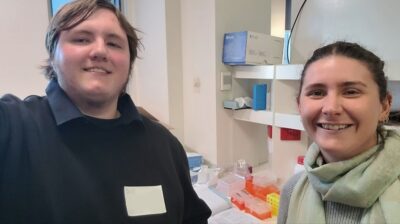
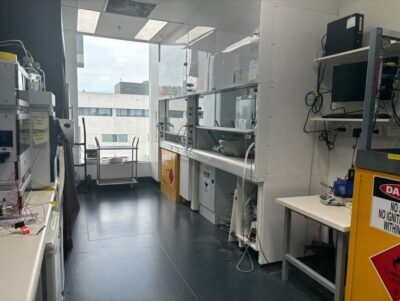
I had the opportunity to visit WEHI Parkville recently, where Mahta gave me a tour of the research facilities on level 7, where she w orks, and level 4. Although I know very little about chemistry, it was still so interesting to see all the glassware on the benches and in the fume hoods, just like in movies. My favourite part was when we went to a room with all the analytical instruments (shown in the photo), such as a microwave synthesizer and chromatography machines, as well as a special room for an NMR spectrometer (which Mahta mentioned wasn’t particularly strong despite its size!).

It was fascinating to see how the techniques we learn in first-year chemistry electives, like using UV lamps for chromatography, can be applied in professional labs. Learning about how technology can be used to determine the structure of a compound was especially intriguing as I hadn’t realised this was possible before! Mahta also explained how drug discovery actually works using a funnel diagram. This reinforced her point in all our earlier meetings that soft skills, such as patience, resilience, and collaborative problem-solving, are vital in research and any technical career.

Despite my visit being late in the day, I still got to meet some of Mahta’s friends who stayed behind. It was great to hear about their work, especially seeing how their various research areas complement each other. Talking with them also gave me a sense of how supportive and welcoming the team culture is across the entire organisation.

Overall, visiting WEHI was an incredible experience that gave me a much clearer picture of what it’s like to work in a research environment. It has given me a lot to think about as I consider my own pathway after university!


Mentor Leaders Program Spotlight: My Behind‑the‑Scenes Day at the MCRI

By Mentor stories, News

by Damion Lenne, Bachelor of Biological Sciences student at La Trobe University and In2science Mentor
Recently, I had the opportunity to visit my mentor’s workplace as part of the In2science Mentor Leaders Program. The program pairs you up with a professional in science and guides regular meetings to provide both advice as your mentor but also experiences and information that you can pass down to your In2science students. My mentor’s name is Rhiannon Grant, and she studies food allergies at the Murdoch Children’s Research Institute (MCRI). I was excited to visit especially considering the scope of the Royal Children’s Hospital (RCH), and the amount of research possible there.

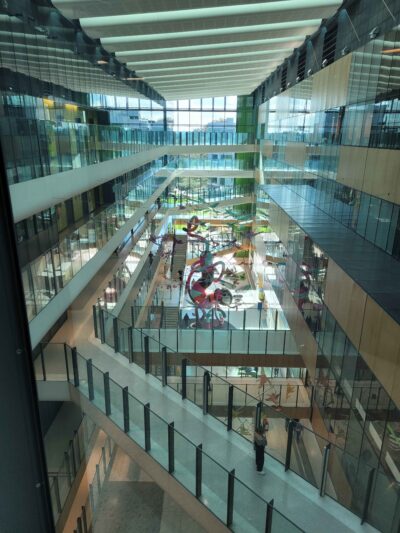
I arrived about an hour earlier than we scheduled so I took the time to explore the Children’s Hospital. It was extremely open and didn’t really feel like a hospital which was really unique, especially considering the difference it must make for the kids who are receiving treatment there. After exploring I made my way to the MCRI check in area and met Rhiannon.

We took the elevator and she gave me a tour of her lab and office spaces; they really seemed like they had someone for every discipline!

Rhiannon’s lab was where she carried out most of her practical research. It had an amazing view. After the tour, we sat down at the in-office café (called the Synapse – I always love a neuroscience pun)  and we had a chat about Rhiannon’s current research and how she found herself in the position she was currently in through her studies and life experiences, which is always interesting to hear about. She then asked me about how I was going and my future directions, and about research I was currently working on through uni.
We chatted about In2science and our current work in volunteering with the Scouting Association (which we are both involved in – very cool!) and about strategies you could use when communicating science to a younger audience or community members through these programs.

Overall, visiting the MCRI was an informative experience, I sincerely enjoyed talking in person with my mentor and seeing where they do their work.

A Mentor Leaders Program Moment: Seeing Science From a Whole New Perspective

By Mentor stories, News

by Sahiti Peddisetti, PhD student at La Trobe University and In2science Mentor

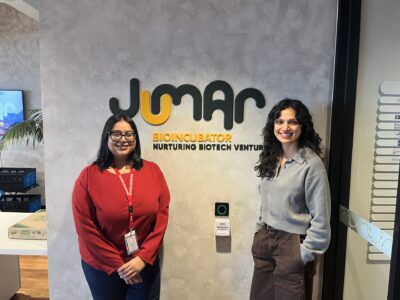
Through the In2science Mentor Leaders Program, I have been connected with my mentor, Dr Palak Mehta, since April this year. While most of our catchups have been online, we often chat about PhD life, science, and research. Having someone outside my own research environment to share ideas, experiences and perspectives with has been incredibly valuable. So, when I had the chance to meet Palak in person, I was excited to see where she works and gain an insight into her world of science.

On 20 August, I visited Palak at Proxima Bio in the CSL building in Melbourne. We spent some time catching up before exploring the laboratories and office spaces and discussing the research being undertaken by the team. What stood out to me was seeing how a small team can work collaboratively on ambitious research with the potential to make a big impact.

Proxima Bio is an Australian biotechnology company spun out of the Walter and Eliza Hall Institute of Medical Research (WEHI) and now based at the Jumar Bioincubator. The company is developing a new class of medicines called cell-surface degraders, which are designed to target and remove disease-causing proteins that have traditionally been difficult to treat. Its research has potential applications in areas including cancer and autoimmune diseases.

As someone whose own PhD research is in food science, it was fascinating to see a completely different side of scientific research. The visit reminded me just how broad the field of science is and of the different environments scientists can work in. While the research at Proxima Bio is very different from my own, I enjoyed seeing the shared focus on using science to solve complex problems and create meaningful outcomes.

Meeting Palak in person was a wonderful addition to the mentoring experience I have had so far. Our conversations have given me a valuable space to talk about PhD life and science, and visiting her workplace gave me another perspective on what a career in science can look like. I’m grateful to the In2science Mentor Leaders Program for creating this connection and giving me the opportunity to step outside my own research area and experience science from a different perspective.

Semester 1 Wrap-up: A Successful Start to 2026

By Mentor stories, News

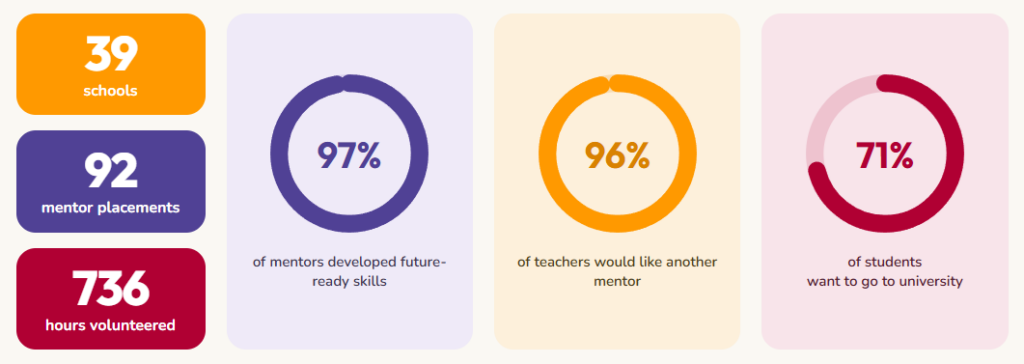
With the winter school holidays just beginning, Semester 1 placements have wrapped up at In2science. Across Victoria, mentors stepped into classrooms or logged on to online sessions with enthusiasm, courage, and a genuine desire to make STEM feel achievable for every student they met. With an incredible 92 placements across 39 schools, it has been a very successful start to mentoring in 2026.

We asked some of our amazing mentors to look back on their time with In2science and share their thoughts.

For Kane from The University of Melbourne, the experience was transformative from the very first day. “As a non-native English speaker, stepping into the classroom took a lot of courage, but the immense warmth and respect I felt from day one made me feel truly welcome. Two moments will stay with me forever: being called ‘Sir’ for the very first time, and hearing a collective ‘Noooo!’ from the students when the teacher announced it was my final session. That reaction was the greatest reward I could have asked for. In the end, I believe I gained just as much from this incredible journey as the students did.”

For Hyo from La Trobe University, the learning flowed both ways. “I originally joined to help inspire the kids in STEM, but I feel like I’m the one who walked away inspired and having learned so much.”

eMentor Stephanie from Deakin University found meaning in becoming the kind of guide she once needed. “Being part of In2science this semester was a really meaningful experience. Over the six weeks, mentoring gave me the chance to be the person I wish I had in high school, someone who could help make university, subject choices and career pathways feel less overwhelming, and remind students that their future is something they can actively shape.”

From RMIT University, Nireeksha’s highlight was a spark of shared passion. “In terms of wins, one that really stood out was connecting with a student who was genuinely passionate about coding. She would come up to me after sessions to ask about career pathways and even gave me lovely feedback on my presentations. One thing I’m really proud of is making sure every student felt seen. I made it a point to visit each student individually, check in on their understanding, and encourage them along the way – especially one student who was finding the concepts harder to grasp. Seeing the whole group respond positively and stay engaged made it all worthwhile.”

Reflecting on his first semester as In2science Director, Dr Cory Smith shared his gratitude for the community that makes all of this possible. “Hearing the stories that mentors have brought back from their placements this semester has been wonderful. A huge thank you to the teachers who welcomed us into their classrooms, to the students who connected with us online through eMentoring, and to our mentors for the care and commitment they brought every week. We’re looking forward to doing it all again in Semester 2!”

If you are keen to get involved with In2science, reach out to us today!

Reflections from an eMentor

By Mentor stories, News

Aleeta Carmody is studying a Bachelor of Human Resource Management majoring in Psychology at Deakin University. This semester she mentored two year 9 students at Sale College through the In2science eMentoring program. While in high school at Galen Catholic College in Wangaratta, Aleeta was a mentee in the same program. Here, Aleeta reflects on how valuable having a mentor was when she was in high school, and her motivations for joining the program as a current university student.

When I was in year 10 I was paired with my eMentor, Sara. I can’t exactly remember what she was studying but I believe she was doing a Masters thesis about blood. Talking to her, she had a clear passion about STEM and it was infectious. Despite this, she was honest about the difficulties of academia and getting research funding. It was really inspiring that she continued to do something she loved despite the obstacles and uncertainty. I wanted to find a pathway that gave me as much drive and fulfilment as she had. We spent many sessions discussing the different careers and pathways. We also discussed what I was doing in classes, science news, and general phenomena and theories. I really appreciated her commitment to providing me the mentorship I needed at the time.

I found the transition to university quite difficult. I think in many ways I was trying to put off moving to the next phase of my life; I finished my last shift at my gap year job on Friday, moved to Melbourne over the weekend, then started my first classes on Monday. Logistically I could have moved earlier but I was really comfortable in my life and enjoyed my job. I ended up moving back home quite quickly because I found all the change to be too much. Being able to work and be surrounded by community is more important to me than I realised prior to starting uni. I also struggled with having a full course load. In high school, I was taking a full load just fine but a key difference with studying uni online is that technically you can do things anytime. There are often classes you can attend live but if you miss them you can always just watch a lecture. Skipping classes live is an easy trap to fall into and not properly engage. Eventually I found a good balance. For me this means working part time, studying part time, and participating in my local community theatre group.

When I saw the opportunity to become a mentor through the In2science program, I jumped at it. I really wanted the opportunity to share my love of STEM with others and give back to a program that I really enjoyed being a part of. Despite my course being business-focused my major is psychology. I try to apply what I consider the key components of science to every aspects of my life: curiosity, the knowledge of those who came before you, and data collection/analysis. I genuinely believe we can all be scientists, not necessarily in the traditional way in a lab but in the sense that we can all use research, observations, and experiment with different variables to make things better. I do my best to share this perspective with my mentees while also focusing on giving them what they want to get out of the program. I’ve found it really rewarding to be a mentor and I look forward to catching up with my mentees each week.

Podcast celebrates Women in Science!

By Mentor stories, News

In2science is excited to celebrate the International Day of Women and Girls in Science (11 February) with the release of a Women in Science podcast by Deakin University, featuring two of our amazing In2science mentors, Brooke Jensen and Zoe Brittain. Listen to them discuss their STEM journeys and the importance of having strong female role models with Tordy Rowe, Deakin’s In2science Program Coordinator. Our In2science mentors are inspiring examples of women in science leadership roles, sharing their enthusiasm and passion for STEM with secondary school students.

Click here to listen!

Celebrating STEM with Ngarri Primary School

By Mentor stories, News

By Tordy Rowe


Although at In2science we predominantly work with secondary schools and their students, we are strong supporters of engagement with STEM at all ages. On Wednesday August 16, as part of National Science Week, In2science had the privilege of attending Ngarri Primary School’s STEM Celebration Afternoon. Deakin University mentors Jolene Rosca, a Bachelor of Psychological Science student, and Vaijayanti Kelkar, studying a Bachelor of Forensic Science and Bachelor of Criminology, represented In2science as exciting examples of what STEM can look like after school.


Jolene and Vaijayanti, both current In2science mentors at Matthew Flinders Girls Secondary College, shared their stories with the gathered families before leading activities in forensic science and statistics. Vaijayanti’s forensic activity proved very popular, with students eagerly comparing their fingerprints to their parents’ and looking for similarities. Jolene shared a maths card trick with students, to much disbelief, until she explained and taught the statistical concepts behind it. Every family opted to engage in their activities, allowing both mentors to showcase their enthusiasm and knowledge about STEM and its endless possibilities.


As Jolene put it, “It was definitely a different experience, but seeing the students excited about the STEM activities was very heart-warming. It made me even more enthusiastic about studying my degree. Having the opportunity to inspire these students was very fulfilling, and I would love the opportunity to do it again.” In2science would like to thank Brittney and Ngarri Primary School for the opportunity to engage with the attending families, and we hope that we have inspired more school students to continue to study STEM.

In2science Mentors Share their Wisdom with Student Ambassadors

By Mentor stories, News

At In2science, we love to provide opportunities for our mentors to go beyond the traditional structure of our program and are always looking for new ways to give back to the community. On Monday August 21, three of our outstanding mentors shared stories of their experiences at university with participants in the Student Ambassador program at Banyule Nillumbik Tech School in Greensborough. In2science was honoured to be invited to the Tech School’s Ambassador Day, and jumped at the chance to engage with the 41 year 7 to 10 students from the participating partner schools.


Rachel Ella, past mentor and current In2science Program Coordinator, opened the session by discussing the winding pathway she has taken to arrive at her degree, a Bachelor of Science majoring in Maths and Chemistry. Rachel’s engaging and humorous presentation described the many different paths she has followed and how they have led to her pursuing her dream of secondary school teaching. Rachel’s key message was that journeys in life almost never go straight from A to B. It is important to embrace all the twists and turns you encounter along the way as you head towards your end goal (which might also change!).


The next presenter was Vincent Cutugno, Bachelor of Psychological Science student at La Trobe University and mentor at Templestowe College. Vincent spoke openly about struggling to work out what he wanted to do in his future, and how he sought advice from lots of different places – friends, family, even online quizzes – before discovering his passion for psychology. Vincent’s advice for the students was that once they get to university it is vital they are prepared to take responsibility for their own learning, and to explore their options if they are not sure what to study.


Joshua Watkins, who is mentoring at Williamstown High School while studying a Bachelor of Biomedical Science at Deakin University, had some fascinating insights on the challenges he faced when starting university in Australia after attending high school in Canada. He also spoke about how he created his own opportunities, such as undertaking an internship with CSIRO, while completing his degree. Joshua’s message to the students was that university can be daunting until you ‘find your people’ and build strong connections and support networks, which will make the experience even more enjoyable.


During the Q&A session, the Student Ambassadors had some incredibly insightful and thoughtful questions for the presenters. We were all extremely impressed by the consideration these young adults are giving to their future study and careers. We hope they found our advice – such as volunteering to gain experience – useful, and we are sure they will all make the most of forthcoming opportunities. In2science would like to thank Scott, Kayla, Maria and Anastasia from the Banyule Nillumbik Tech School for inviting us to their Ambassador Day. We wish the Student Ambassadors all the best for their futures, and we can’t wait to return to inspire more students to follow their passions.