What a Day at WEHI Taught Me About STEM Careers and Culture

By News, Profiles

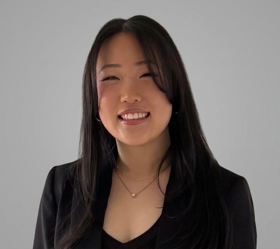
by Jian Bai, Bachelor of Science student at The University of Melbourne and In2science Mentor

My name is Jian, and I am currently a second-year Bachelor of Science student at The University of Melbourne, majoring in Mechanical Engineering Systems. I applied as a mentor for In2science at the start of this year as I wanted to develop my communication skills and to promote STEM to high school students. Later, I signed up for the Mentor Leaders Program as I wanted to learn more about what life beyond university is like, and pathways available after graduating.

My mentor, Dr. Mahta Mansouri, is a Research Officer at the Walter and Eliza Hall Institute of Medical Research (WEHI), working on small molecule design and synthesis for drug discovery. Despite our different disciplines, I have realised that there are many similarities between most careers in STEM; being able to collaborate with others and network well are both essential skills to practise. Another idea I found helpful is that the work you do within similar roles can vary a lot between organisations, and considering how your personality meshes with the company culture is even more important than I thought.

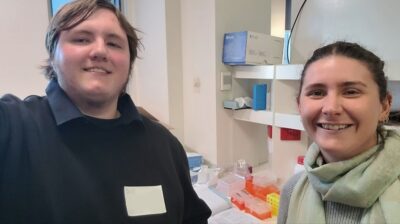
I had the opportunity to visit WEHI Parkville recently, where Mahta gave me a tour of the research facilities on level 7, where she w orks, and level 4. Although I know very little about chemistry, it was still so interesting to see all the glassware on the benches and in the fume hoods, just like in movies. My favourite part was when we went to a room with all the analytical instruments (shown in the photo), such as a microwave synthesizer and chromatography machines, as well as a special room for an NMR spectrometer (which Mahta mentioned wasn’t particularly strong despite its size!).
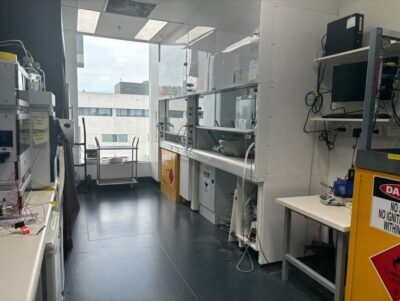
It was fascinating to see how the techniques we learn in first-year chemistry electives, like using UV lamps for chromatography, can be applied in professional labs. Learning about how technology can be used to determine the structure of a compound was especially intriguing as I hadn’t realised this was possible before! Mahta also explained how drug discovery actually works using a funnel diagram. This reinforced her point in all our earlier meetings that soft skills, such as patience, resilience, and collaborative problem-solving, are vital in research and any technical career.

Despite my visit being late in the day, I still got to meet some of Mahta’s friends who stayed behind. It was great to hear about their work, especially seeing how their various research areas complement each other. Talking with them also gave me a sense of how supportive and welcoming the team culture is across the entire organisation.

Overall, visiting WEHI was an incredible experience that gave me a much clearer picture of what it’s like to work in a research environment. It has given me a lot to think about as I consider my own pathway after university!



From Pollen to Pokémon: Kira Hughes’ STEM Adventure Inspires Mentors

By Events, News

The In2science mentors were treated to another stellar webinar this week—this time featuring the endlessly impressive Dr Kira Hughes, Research Grants Officer at the Peter MacCallum Cancer Centre. Kira began with an overview of her fascinating PhD research into thunderstorm asthma. He project involved developing highly sensitive pollen sensors, investigating how pollen and the environment interact to cause asthma, and training AI to identify different pollen species. We also have Kira to thank for pollen forecasting apps, which hay fever sufferers are very grateful for, especially at this time of year! Kira is also a talented science communicator, appearing on tv, radio, and podcasts. She creates content by blending her enduring love of video games with her passion for STEM by using Pokémon to explain complex science concepts. Impressively, she has also delivered a TedX talk, and performed at the Melbourne International Comedy Festival!
Kira has accomplished much in her career, and she explained how it all began with a chance encounter with a Deakin University student who encouraged her to pursue a Bachelor of Biomedical Science. From there, her path zig‑zagged in wonderfully unexpected ways. She navigated roadblocks—including COVID‑19 hitting right at the start of her Honours year—yet each challenge pushed her toward new opportunities. Hearing how a non‑traditional journey led to such remarkable success was both refreshing and reassuring for our mentors. Kira encouraged the mentors to seek out diverse opportunities as you never know what you will learn or where they will lead. She also reinforced the importance of considering all their transferable or translatable skills – ones that can be learnt anywhere, from casual retail work to volunteering roles like In2science. Kira’s presentation was insightful and inspiring, and we look forward to seeing where her curiosity takes her next.

Young Researchers Shine at Hume Central Secondary College’s Annual Science Expo

By News

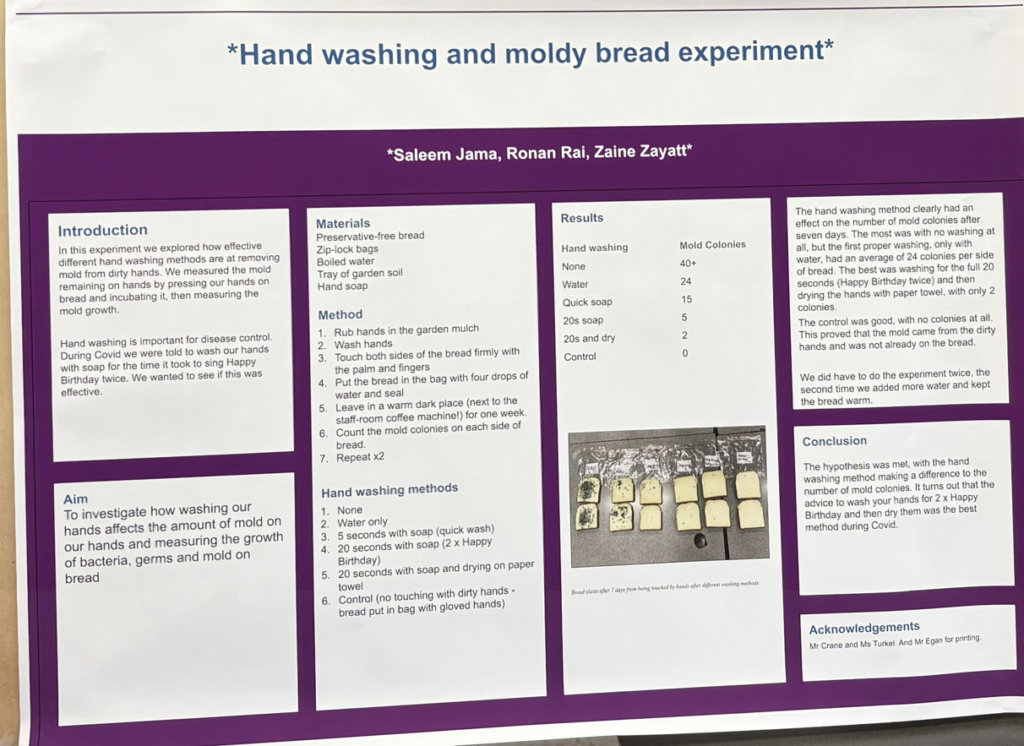
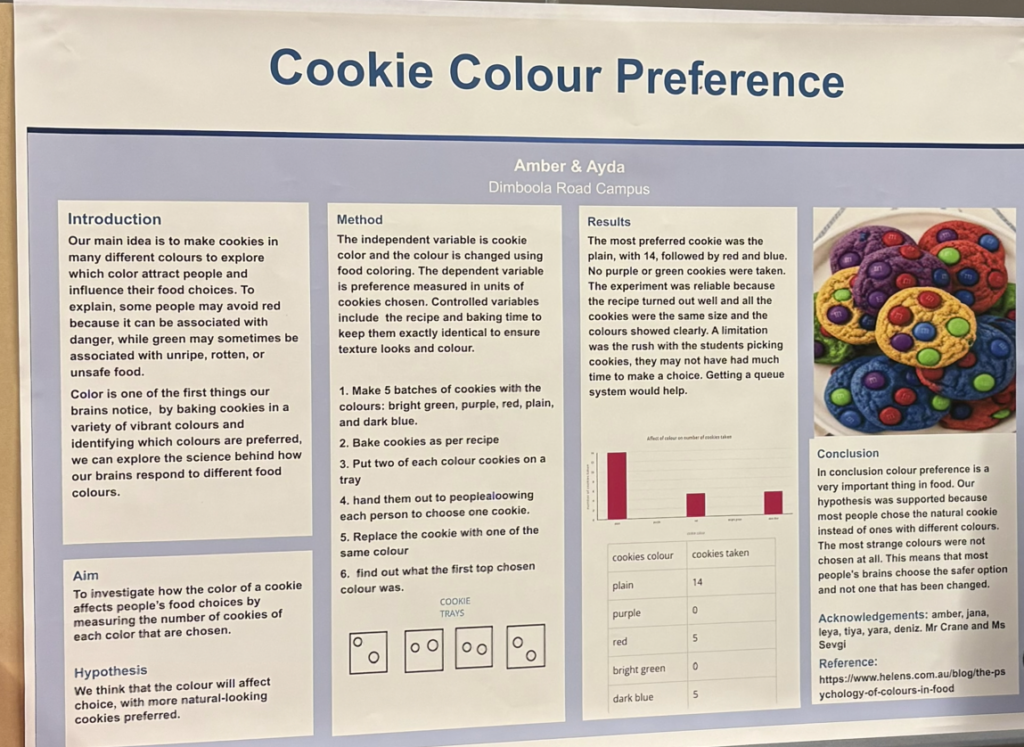
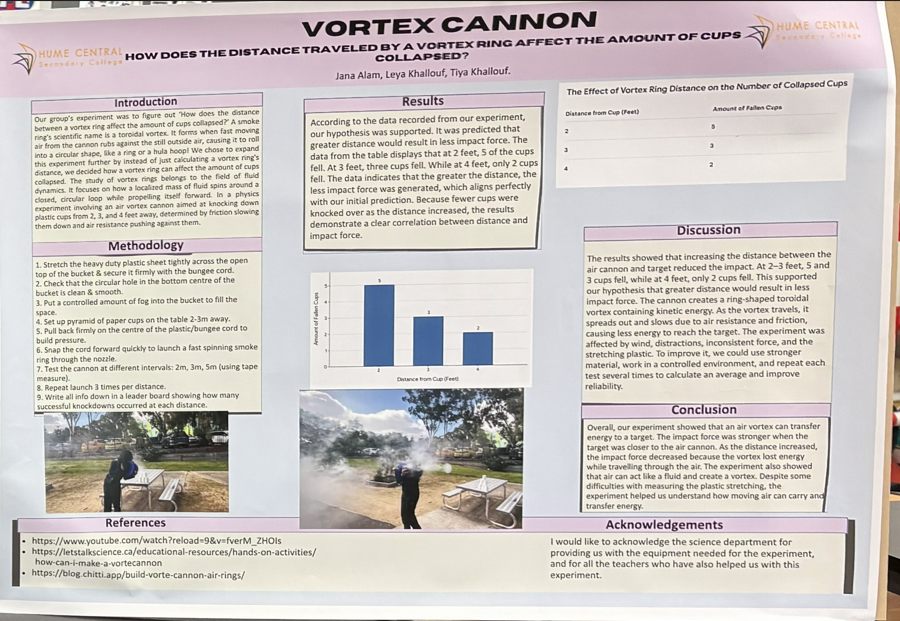
The In2science team were delighted to once again be invited to participate in Hume Central Secondary College‘s annual Science Expo for year 9 students. Spanning across two days in mid-September, with a different school campus taking part each day, this event brings together students, teachers, In2science mentors and industry representatives to celebrate curiosity, discovery and innovation in STEM. The students proudly showcased their research projects with colourful and creative posters, some of which can be seen in the photos below. The critical thinking and scientific inquiry skills demonstrated by these students is very impressive!

Rowan, an In2science mentor studying at La Trobe University, reflected on the experience, saying, “It was so great to see all the projects that had been worked on throughout the term! Some really detailed and great ideas were explored. It’s exciting to see so many students get interested in science during such an important period of learning. Congrats to our future scientists for such informative and interesting presentations.”

Juliette, also an In2science mentor from La Trobe University, shared Rowan’s enthusiasm: “An event which showcased the bright future of the science community. Thank you all for having me and I look forward to what new exciting projects are hosted in the future!”

In2science would like to thank Chris Egan and the STEM teachers at Hume Central Secondary College for hosting such a fantastic event. We also thank Rowan, Juliette, Salsa and Prathima for joining in, and to the team at The University of Melbourne for coordinating our participation in the expo.

If you would like your school to be part of In2science, or if you would like us to join a STEM event at your school, reach out to us today!

Connecting Futures: In2science Mentors Dive Into STEM Career Speed‑Networking

By Events, News

On Tuesday September 22, In2science welcomed our 2026 mentors to our Career Speed‑Networking Event—an evening designed to spark curiosity, build confidence, and open doors to the many futures waiting in STEM. Twelve brilliant STEM professionals joined us at the RMIT University Media Portal for this exciting event. Guests from organisations including Teach For Australia, GSK, The University of Melbourne, Defence Science and Technology Group, CSL, Plants For Space, WEHI, Thermo Fisher Scientific, Museums Victoria, AKD, and Science Gallery Melbourne gathered with one shared purpose: to share their experience with university students looking for that next step after study.
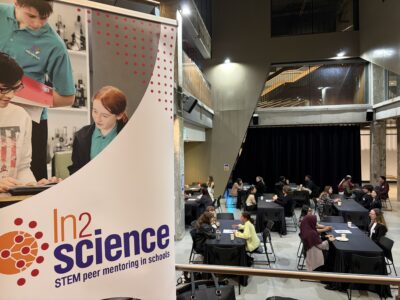
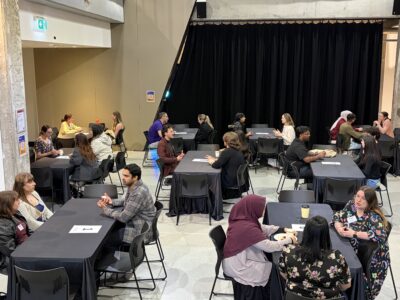
The night began with a warm welcome from Director Dr Cory Smith, setting the tone for an event full of connection and discovery. Guests then joined a lively icebreaker activity, debating whether quirky STEM statements were true or false. Then came the main event: speed‑networking. For seven minutes at a time, mentors sat face‑to‑face with each professional, diving into conversations about career journeys, unexpected pivots, and the realities of life after university. The conversation flowed easily as mentors soaked up advice from people who’ve carved out their own unique STEM paths.

In2science mentor Sahiti, who is completing a PhD in food science at La Trobe University, captured the spirit of the evening perfectly: “Learning from such incredible and diverse professionals was truly inspiring. Connecting with them opened my eyes to the vast range of career pathways within STEM and helped me appreciate the many different ways I can make an impact through my work.”

From the other side of the table, Museums Victoria’s Catriona Nguyen-Robertson reflected on the joy of connecting across generations: “Being a mentor in the In2science program was really a kick-starter for me in STEM education, and I want to give back however I can and empower current mentors to be successful in their chosen paths too!”

Mentor Mackenzie, a Bachelor of Science student at The University of Melbourne, also found a powerful thread running through the night: “It was really valuable for me to hear everyone’s career journeys, as I found a common message from each of them that stuck with me throughout the evening.”

Events like this are among our favourites at In2science. They give mentors something rare and invaluable: the chance to speak directly with a diverse group of STEM professionals who are generous with their stories, honest about their challenges, and passionate about helping others find their way. We are so grateful to the professionals who gave up their time to share their stories and look forward to hosting our next networking event in the near future.

STEM Career Wisdom from Dr Will Sullivan

By Events, News

Our brand-new webinar series continued this week with an inspiring presentation from Dr Will Sullivan. Will is the Assistant Director of STEM Outreach and Engagement at the Defence Science and Technology Group (DSTG), Department of Defence. Will is also a long-time member of the In2science family from his years as RMIT Program Coordinator. It was a pleasure to welcome him back and hear about his winding, relatable journey into STEM. Will shared how he once felt unsure about his direction after high school – something that many of us can identify with! Will discovered a love of food science and studied a Bachelor of Science (Food Technology and Nutrition) at RMIT University, followed by a PhD in Food Chemistry. He spent some time teaching scientific skills to students in China, which sounded like a very exciting experience. Will also spoke about the work he currently does at DSTG, where he is heavily involved in the STEM talent pipeline through events and graduate programs.
Will had lots of thoughtful and practical advice for our mentors. He emphasised the importance of saying yes to new experiences, but also knowing when to say no to avoid negative impacts like burnout. He spoke about the importance of a work/life balance and finding ways to relax while studying. He also encouraged our mentors to build their networking skills, as this is a great way to meet people in different fields, to learn from the experience of others, and to uncover new opportunities. Will has had a fascinating career so far and we’re grateful he shared his wisdom with our mentors.

Mentor Leaders Program Spotlight: My Behind‑the‑Scenes Day at the MCRI

By News, Profiles

by Damion Lenne, Bachelor of Biological Sciences student at La Trobe University and In2science Mentor
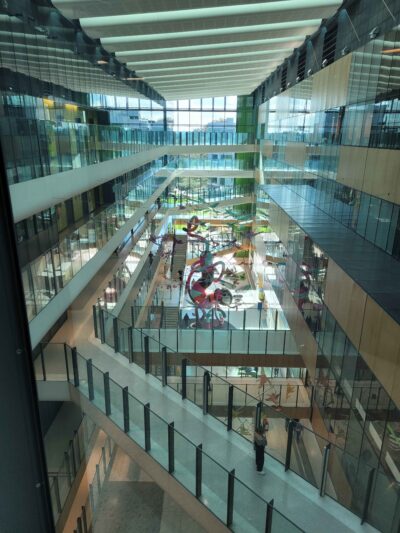
Recently, I had the opportunity to visit my mentor’s workplace as part of the In2science Mentor Leaders Program. The program pairs you up with a professional in science and guides regular meetings to provide both advice as your mentor but also experiences and information that you can pass down to your In2science students. My mentor’s name is Rhiannon Grant, and she studies food allergies at the Murdoch Children’s Research Institute (MCRI). I was excited to visit especially considering the scope of the Royal Children’s Hospital (RCH), and the amount of research possible there.

I arrived about an hour earlier than we scheduled so I took the time to explore the Children’s Hospital. It was extremely open and didn’t really feel like a hospital which was really unique, especially considering the difference it must make for the kids who are receiving treatment there. After exploring I made my way to the MCRI check in area and met Rhiannon.

We took the elevator and she gave me a tour of her lab and office spaces; they really seemed like they had someone for every discipline!

Rhiannon’s lab was where she carried out most of her practical research. It had an amazing view. After the tour, we sat down at the in-office café (called the Synapse – I always love a neuroscience pun)  and we had a chat about Rhiannon’s current research and how she found herself in the position she was currently in through her studies and life experiences, which is always interesting to hear about. She then asked me about how I was going and my future directions, and about research I was currently working on through uni.
We chatted about In2science and our current work in volunteering with the Scouting Association (which we are both involved in – very cool!) and about strategies you could use when communicating science to a younger audience or community members through these programs.

Overall, visiting the MCRI was an informative experience, I sincerely enjoyed talking in person with my mentor and seeing where they do their work.

A Mentor Leaders Program Moment: Seeing Science From a Whole New Perspective

By News, Profiles

by Sahiti Peddisetti, PhD student at La Trobe University and In2science Mentor

Through the In2science Mentor Leaders Program, I have been connected with my mentor, Dr Palak Mehta, since April this year. While most of our catchups have been online, we often chat about PhD life, science, and research. Having someone outside my own research environment to share ideas, experiences and perspectives with has been incredibly valuable. So, when I had the chance to meet Palak in person, I was excited to see where she works and gain an insight into her world of science.

On 20 August, I visited Palak at Proxima Bio in the CSL building in Melbourne. We spent some time catching up before exploring the laboratories and office spaces and discussing the research being undertaken by the team. What stood out to me was seeing how a small team can work collaboratively on ambitious research with the potential to make a big impact.

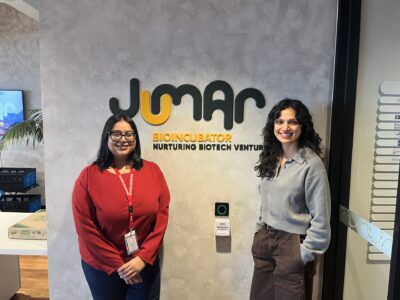
Proxima Bio is an Australian biotechnology company spun out of the Walter and Eliza Hall Institute of Medical Research (WEHI) and now based at the Jumar Bioincubator. The company is developing a new class of medicines called cell-surface degraders, which are designed to target and remove disease-causing proteins that have traditionally been difficult to treat. Its research has potential applications in areas including cancer and autoimmune diseases.

As someone whose own PhD research is in food science, it was fascinating to see a completely different side of scientific research. The visit reminded me just how broad the field of science is and of the different environments scientists can work in. While the research at Proxima Bio is very different from my own, I enjoyed seeing the shared focus on using science to solve complex problems and create meaningful outcomes.

Meeting Palak in person was a wonderful addition to the mentoring experience I have had so far. Our conversations have given me a valuable space to talk about PhD life and science, and visiting her workplace gave me another perspective on what a career in science can look like. I’m grateful to the In2science Mentor Leaders Program for creating this connection and giving me the opportunity to step outside my own research area and experience science from a different perspective.

Fuel, Fire and Forensics: Anastasia Bickley Lights Up Our Latest Webinar

By Events, News

On Thursday August 20, In2science hosted the third in our new series of fascinating webinars. Our presenter was Anastasia Bickley, who is currently in the first year of her PhD at Deakin University. Anastasia is also one of our most committed mentors, having completed four placements at Bellarine Secondary College. Anastasia enthusiastically shares her love of forensic science with her mentees, often bringing in demonstrations and telling stories of real-world applications of this discipline.
Anastasia’s goal is to update arson research and help to make it less time sensitive. She explained how the longer the time is between gathering evidence from a fire and analysing it, the less accurate that information will be. She is focused on bushfires and how campfires can lead to them, concealment of accelerants, and what leads people to not follow the laws surrounding safe fire lighting. During her field work, she was able to locate evidence of past fires, both legal and illegal, and took samples to identify the fuel used. Her methods have led to quicker and more accurate identification of accelerants used, particularly in illegal fires which could potentially cause disastrous bushfires.

Anastasia captivated the crowd with her results and a glimpse into her PhD ambitions. The In2science team can’t wait to see what discoveries she makes next!

Ready to Inspire: Semester 2 Mentors Kick Off Their Journey

By News

With Semester 1 officially wrapped up, In2science is already buzzing with energy as we welcome a fresh cohort of mentors for Semester 2. The training sessions are always a highlight at for the In2science team. Meeting brand‑new mentors, watching their confidence grow, and seeing that spark of excitement as they prepare to inspire their mentees never gets old.

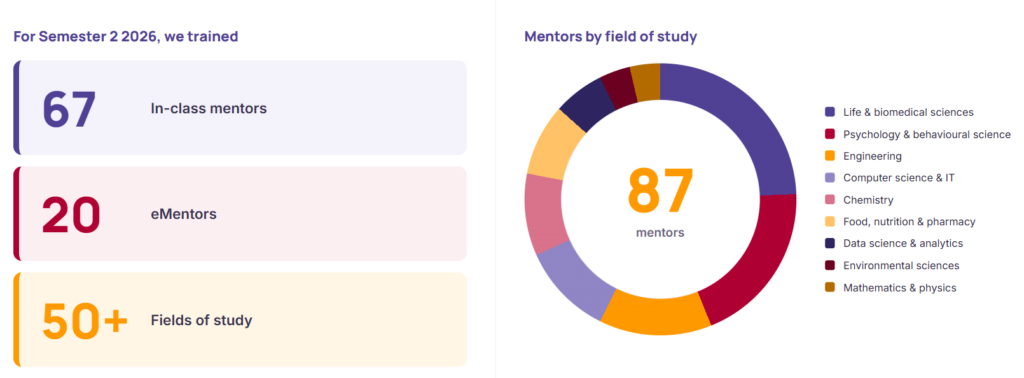
This semester, In2science delivered four in‑person and six online training sessions, with four of those designed exclusively for our eMentors. The turnout was fantastic: 67 mentors completed their in‑class training, and 20 went the extra mile by attending an additional session to sharpen their eMentoring skills. Together, they represent over 50 different fields of study, with life and biomedical sciences, and psychology and behavioural science leading the pack.

Tordy Rowe, Program Coordinator at Deakin University, said “The enthusiasm and engagement at training was infectious – I can’t wait to hear about the difference our mentors will be make in the classrooms. From Lego classes to EnviroSTEM to physics to maths and everything in between, Semester 2 is going to be fun!” New mentor Krishna, a Master of Construction Management student at Deakin, said “My biggest takeaway: STEM isn’t just a collection of subjects. It’s curiosity, creativity, critical thinking, and problem-solving skills that show up in more places than we often realise. I’m incredibly grateful for the opportunity to be part of a program that inspires the next generation to see STEM differently.”

Now, our Coordinators are deep in the joyful chaos of matching mentors to placements across our partner schools. The mentors are eager, prepared, and ready to jump in. Semester 2 is shaping up beautifully and we are looking forward to hearing inspiring stories from the mentors, mentees, and teachers.

If you would like to a mentor to share their passion for STEM with your students, contact us today!

Mentors Go Interstellar: Exploring Space‑Ready Plants in our Second Webinar

By Events, News

On Thursday July 14, our mentors tuned in for the latest instalment of our webinar series, this time hearing from Frazer Thorpe, Education and Engagement Manager for the ARC Centre of Excellence in Plants for Space, based at La Trobe University. Frazer gave mentors an engaging overview of Plants for Space and the outreach work they do across schools to provide students and teachers with ways to connect to the research work being done. Mentors learnt how the team brings a futuristic, yet grounded, vision of space science into the classroom by exploring the science of growing food in space, learning what it takes to sustain human life beyond Earth and how those lessons can be applied to our own agricultural processes.
 

It was a fascinating look at how big questions about space can be brought back down to something very immediate and relatable: what we eat, and why it matters. We finished off the session with a great Q&A, with our mentors keen to dig deeper into Frazer’s work. Our mentors relished the opportunity to learn about another STEM outreach program, reminding us of the importance of the work here at In2science and understanding how we all link together to build student STEM aspiration and engagement.


We’re looking forward to sharing more from our speaker line-up in the months ahead, so stay tuned for what’s coming next!