All Posts By

Nicole Butler

Kicking off 2026 with curiosity: In2science Mentors reflect on their sessions

By News

Building on an incredible 2025, In2science has launched into Semester 1, 2026 with fresh momentum and a growing community. This year, we’re thrilled to welcome three new partner schools and an enthusiastic cohort of mentors from across our four partner universities. Each mentor brings their own lived experience, passion for STEM, and commitment to helping students see what’s possible. To capture the excitement of these first few weeks, we asked some of our newest mentors how their early sessions have been—and their reflections say it all.

Jian, from The University of Melbourne, shared, “I joined In2science because I wanted to help make STEM pathways feel more accessible to students who might not otherwise see them as a possibility. I really enjoyed my first session! I had the chance to speak with most of the students, and many of them were more open than I had expected. It was also really interesting to experience a school environment different from my own, and I’m excited to keep learning more as the program progresses!”

For Damion from La Trobe University, the joy comes from sparking curiosity: “I joined in2science because I’m super passionate about sharing science with others, and I believe that there’s something interesting for everyone. I wanted to be able to help students realise that science isn’t as scary as it looks, if I can even help one student realise that then I’ve done my job well. My first few sessions have been really successful, I’ve been able to relate to students and explain things in ways that suit them/relate to their interests, it was a bit scary at first but now going to each session is really exciting.”

Norman, from Deakin University, is embracing the challenge of stepping into a new environment: “I joined In2science because it would be a great opportunity to explore new skills for me that will be valuable to me in my career, and to provide my own knowledge and experience I already have to younger people! I’ve found my first few sessions lovely, traditional classroom environments are not ones I am used to, so it has been a good experience for me in practicing my adaptability and application of soft skills in an unfamiliar setting. I understand how vital it is to be able to communicate information to a variety of audiences, and already in these couple of sessions I have had, I feel like I will come out of the program with better communication skills and that the students will have at least been exposed to the idea of university and further study, in STEM or not.”

And RMIT University student Kylie shared, “I joined In2science to give back to the STEM community. I attribute much of my passion and success in this field to my mentors, including mentors from In2science. Growing up, it was the enthusiasm of my STEM teachers that made me want to become a scientist. However, without the chance encounter that occurred back when I was in high school with In2science I would most likely not be where I am today. The mentors from In2science provided encouragement and pathway programs that lead to opportunities that got me into the field where the people I admire most are.  I am now studying a Bachelor of Science. Like anything new, my first session started off nerve-racking and slow. I initially struggled with self doubt in my abilities to be useful in the classroom and questioned whether or not I was making the most of my time with the teachers and students. Honestly, I think this sort of feeling and thinking lasted for one session as I believe I didn’t get here without picking up some skills along the way from my degree and the support of mentors from In2science. With each passing session bringing me closer to my supervising teacher and students my confidence grew. I now find that my sessions fly by too quickly.” 

With mentors like these stepping into classrooms, Semester 1 is already shaping up to be something special. The enthusiasm, openness, and willingness of the mentors to grow alongside their students sets the tone for another inspiring year of connection, curiosity, and STEM discovery. If you want to get your school involved with In2science, contact us today!
In2science Awards Night 2025 – highlights from turning 21!

By Awards, Events, News

On Tuesday December 9, In2science staff, participants and esteemed guests gathered at the Ian Potter Auditorium at The University of Melbourne to celebrate another successful year of In2science. Everyone was dressed up and ready to have a fun night – after all, it’s not every day you turn 21!


Video by Social Moments by Willow

In2science Director Dr Cory Smith opened the ceremony with an Acknowledgement of Country and spoke passionately about the importance of STEM in everyday life – even in activities like baking and rock climbing! In2science Chair, the Honourable Professor John Brumby AO, echoed Cory’s sentiments and thanked all who had participated in In2science in 2025 – our Board Members, funding bodies, past and present staff, and of course the teachers, mentors and mentees that make this program so fantastic. Keynote speaker Dr Kira Hughes, from the Peter MacCallum Cancer Centre, gave an inspiring speech about her own personal STEM journey and the importance of role models, something that resonated with all of our participants.


The awards themselves began with recognition of the teachers and schools that went above and beyond to create welcoming, supportive environments for mentors and students. The Mentor Support Teacher Award went to Leanne Kirkland from Sale College, and Danielle McLeod from Epping Secondary College. Leanne’s effort in bringing the eMentoring program to her school was outstanding and the Coordinators found her so easy to work with. Danielle was recognised for her ongoing encouragement of her mentor Emma, giving her lots of freedom in the classroom. Our joint winners of the School Engagement Award were Ballarat High School and Doveton College. Ballarat High School has been an In2science partner since 2011 and are always so keen to be involved in our eMentoring program. Doveton College provides a welcoming environment for our mentors and the teachers at this school are a joy to work with. We also had a special Outstanding Contribution Award this year, which was awarded to Jennifer McCarthy from Bellarine Secondary College. Bellarine was the first school to host both in-class mentors and eMentors in an official capacity, and that was all thanks to Jen’s tireless dedication.
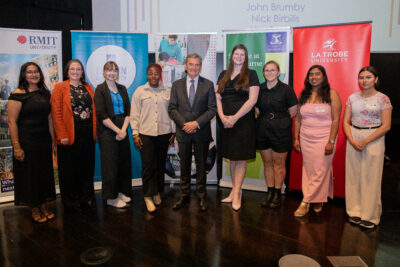
 

We were thrilled to award four high school student mentees with the Outstanding Mentee Award. It was a tough field this year, with 10 amazing finalists. Our winners were Willa Curnow from Sale College, Xavier Everett from Galen Catholic College, Charlie Gorman from Matthew Flinders Girls Secondary College, and Jacob James from Bundoora Secondary College. We want to recognise the growth these mentees have shown during their time working with their In2science mentors and encourage them to continue to engage with STEM long into the future. We then heard from our next speaker, award-winner Willa Curnow. Willa spoke with confidence and grace about the two mentors she had the opportunity to work with while in the eMentoring program. We loved hearing about how her mentors Srishti and Anmol taught her more about their shared interest, psychology, and about university life.


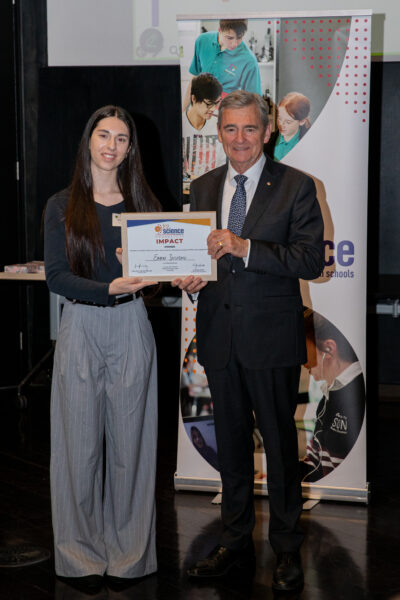
The mentor awards followed, and we had a fabulous pool of finalists to choose from this year, making our decisions very difficult! The STEM Champion Award was given to Erisha Tayal of The University of Melbourne. Erisha was recognised for her enthusiasm and work to inspire her students, especially the girls, to enter a STEM field. We awarded the Connection Award to Ella Jalland from Deakin University, due to her outstanding ability to engage with mentees at any level and use humour to make STEM fun. The Impact Award was given to Emma Iacuone from La Trobe University. Emma already has such a busy schedule, but she always has time for In2science mentoring and is kind and patient with her students. Tanvi Shaikh from RMIT University was awarded the Dedication Award due to her commitment to her placement across both semesters of 2025, and her endless enthusiasm for STEM.


Finalists for the Mentor Leaders Program, which connects In2science university student volunteers to their own mentor working in industry, were tough to narrow down as we had so many wonderful mentor-mentee pairs this year. Nadia Niyubushobozi from Deakin University won the award, as she wholeheartedly embraced the aims of the program in her meetings with her mentor, Dr Kira Hughes. In her summary, Kira praised Nadia’s kindness and determination, and her desire to continue to help others achieve their goals. We concluded the awards presentation with two eMentor awards. First up, Thisanja Cooray from La Trobe University was given the Regional Impact Award for her outstanding work as an eMentor in 2025. Thisanja truly does go above and beyond for her mentees, organising to meet up at university open days and teaching them hands-on scientific techniques. Aleeta Carmody from Deakin University was awarded the Regional Connection Award. Aleeta has been an eMentor for two years and always develops a strong rapport with her mentees. She is a big supporter of In2science and we love working with her!


We finished up the ceremony with a fabulous speech from Mackenzie Liddell, a Bachelor of Science student at The University of Melbourne and finalist for the Connection Award. Mackenzie spoke about her time as a mentor at Pakenham Secondary College and the fun activities she had the opportunity to participate in, like an excursion to Cranbourne Gardens. Mackenzie’s inspiring speech was a wonderful way to wrap up the official presentation. It’s always a joy to host this fabulous event and get the opportunity to hear about how much our participants enjoy being part of the program. The In2science team is looking forward to an even bigger and better year in 2026!

 

Click here to read more about the 2025 Awards winners and finalists

Click here to access the 2025 Awards Photo Gallery


In2science is grateful for the generous support of our Program partners: the Department of Education Victoria, the Department of Industry, Science and Resources, and the Selby Scientific Foundation.


In2science Secures Funding Through Victorian Department of Education’s Strategic Partnerships Program

By News

In2science is proud to announce that it has been awarded funding through the Victorian Department of Education’s Strategic Partnerships Program (SPP) through to the end of 2027 to help deliver the program, continuing a successful relationship with the SPP that began in 2018. This renewed support reflects the program’s ongoing impact and achievements in fostering STEM engagement across Victoria.

The funding was awarded after a highly competitive funding round, underscoring the success and value of In2science’s work in connecting university STEM mentors with secondary school students. Since its inception in 2004, In2science has been helping to inspire the next generation of scientists, engineers, and innovators by placing over 4000 mentors into over 200 schools, mentoring more than 85,000 students.

Dr Cory Smith, In2science Program Director, said, “This SPP funding reaffirms the program’s role as a trusted partner in delivering STEM outreach to the communities that need it most, and we’re excited to work towards a future where all Victorian students have the opportunity to see themselves in STEM.”

This investment will enable In2science to continue supporting schools throughout Victoria through our in-class mentoring and eMentoring initiatives. By maintaining and expanding these programs, we can reach the students who need us most – those who may not otherwise have access to STEM role models – and help them discover the opportunities that STEM can create in their lives.

For more information about the Strategic Partnerships Program, visit Partnerships: Department of Education.

Relationship Building – a key skill for mentoring and beyond

By Events, News

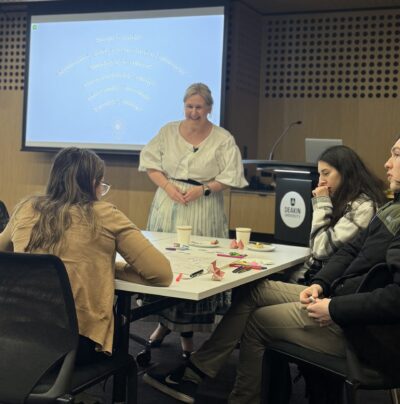
With the end of semester 2 rapidly approaching, the In2science team hosted our second mentor professional development workshop for the year. We love offering free workshops on a variety of topics to give back to our hard-working volunteers. This time, we headed to RMIT’s impressive Storey Hall and enjoyed the sweeping views of the CBD (albeit on a rather gloomy day). We were lucky to host two guest speakers from Teach for Australia, a proud partner of In2science. Senior Recruitment Manager Costa Constantaras and colleague Varun Asthana delivered a humorous and insightful presentation all about relationship building.
While mentoring, our volunteers foster relationships with a diverse range of people – from their host teachers, to the In2science team, to their high school student mentees. In their future careers in STEM they may need to connect with lecturers, research heads, supervisors, managers, and colleagues. Recognising what each different relationship needs can be tricky and requires specific skills. Costa led the attendees through a discussion of relationship-building skills like showing respect, practising empathy and being open-minded. Our mentors were encouraged to put their skills into practice by learning about each other through meaningful conversations and active listening.

Our attendees learnt a lot from the workshop and appreciated the opportunity to ask questions about the relationships they are cultivating with their mentees. It was great to see the mentors sharing their own experiences and helping each other to problem solve. In2science would like to thank Teach for Australia for helping us to organise this workshop, and we look forward to bringing more professional development events to our mentors next year.

Science Expo at Hume Central – two fantastic days engaging with STEM!

By News

In2science was thrilled to once again be invited to attend the annual Science Expo at partner school Hume Central Secondary College. Held over two days at two campuses, the expo showcases science projects from the year 9 students. Our mentors, as well as special guests from CSL and Farmwall, were invited to judge the Most Scientific and Best Communication awards, and to share their own experience of working in STEM.

Organiser Chris Egan, Science and STEAM leader at Hume Central Secondary College, had this to say about the event:

“Our Year 9 students became the teachers recently, showcasing their impressive science experiments to an audience of younger students from year 7 and year 5/6 students from Broadmeadows Primary and real-world scientists. What started as a classroom project transformed into an exciting day of discovery and inspiration.

The professional scientists weren’t just polite observers – they were genuinely impressed! The visiting scientists were thrilled to see the depth of scientific thinking and genuine curiosity our students displayed. Our students turned the tables asking thoughtful questions about how they became scientists, what drives their research, and what advice they’d give to young people interested in science careers.

Days like these do more than just showcase academic achievement. They build confidence, spark career aspirations, and show students that science isn’t just about textbooks – it’s about curiosity, discovery, and making a real difference in the world. The enthusiasm was contagious, and we couldn’t be prouder of how our year 9 scientists represented themselves and our school community!”

The participants from In2science had some extremely positive feedback to share about their experience.

Himanya (left), a Bachelor of Biomedical Science student from Deakin University, said, “It was inspiring to see how confidently the students explained their projects and how well they engaged with us while sharing their ideas. Their creativity, teamwork, and ability to communicate science in simple but powerful ways really stood out. I also enjoyed sharing my university journey with the students and encouraging them to keep pursuing their curiosity.”

The University of Melbourne Masters of Environmental Science student Laura said, “The science expo demonstrated that passionate teachers create passionate students that are capable of scientific pursuits! The year 9 students understood and presented their science projects with confidence and knowledge. I was amazed at the variety of projects and in awe of the staff who are so supportive and inspiring to the students. The culture of the school was really highlighted, with students (both primary and secondary) being engaged and interested in science!”

Kaynie (right), studying a Bachelor of Science/Master of Teaching at Deakin University, said, “It was an amazing experience for me. It encouraged students and their passion as well as let everyone see the significance of STEM industry around us. The power of education will contribute to empower the future of STEM.”

Finally, Ahalya, also studying a Bachelor of Biomedical Science at Deakin University, said, “The science expo was fantastic, demonstrating year 9 students’ technical skill and excitement for discovery through models and analogies that provided a real-world example of how science plays an important role in everyday life. The event gave an opportunity for both students and student volunteers to learn, teach, and develop. I hope that these students’ interest leads them down STEM pathways, as they may become future researchers, mentors, educators, and changemakers. As a STEM student, I was proud to share my academic knowledge and learn from this incredible journey.”

Sounds like a fantastic two days engaging with STEM! In2science would like to thank organiser Chris Egan for inviting us to be part of the expo, and The University of Melbourne for supporting our mentors attending. We look forward to joining again next year!

If you would like your school to be part of In2science, reach out to us today!


Reflections from an eMentor

By News, Profiles

Aleeta Carmody is studying a Bachelor of Human Resource Management majoring in Psychology at Deakin University. This semester she mentored two year 9 students at Sale College through the In2science eMentoring program. While in high school at Galen Catholic College in Wangaratta, Aleeta was a mentee in the same program. Here, Aleeta reflects on how valuable having a mentor was when she was in high school, and her motivations for joining the program as a current university student.

When I was in year 10 I was paired with my eMentor, Sara. I can’t exactly remember what she was studying but I believe she was doing a Masters thesis about blood. Talking to her, she had a clear passion about STEM and it was infectious. Despite this, she was honest about the difficulties of academia and getting research funding. It was really inspiring that she continued to do something she loved despite the obstacles and uncertainty. I wanted to find a pathway that gave me as much drive and fulfilment as she had. We spent many sessions discussing the different careers and pathways. We also discussed what I was doing in classes, science news, and general phenomena and theories. I really appreciated her commitment to providing me the mentorship I needed at the time.

I found the transition to university quite difficult. I think in many ways I was trying to put off moving to the next phase of my life; I finished my last shift at my gap year job on Friday, moved to Melbourne over the weekend, then started my first classes on Monday. Logistically I could have moved earlier but I was really comfortable in my life and enjoyed my job. I ended up moving back home quite quickly because I found all the change to be too much. Being able to work and be surrounded by community is more important to me than I realised prior to starting uni. I also struggled with having a full course load. In high school, I was taking a full load just fine but a key difference with studying uni online is that technically you can do things anytime. There are often classes you can attend live but if you miss them you can always just watch a lecture. Skipping classes live is an easy trap to fall into and not properly engage. Eventually I found a good balance. For me this means working part time, studying part time, and participating in my local community theatre group.

When I saw the opportunity to become a mentor through the In2science program, I jumped at it. I really wanted the opportunity to share my love of STEM with others and give back to a program that I really enjoyed being a part of. Despite my course being business-focused my major is psychology. I try to apply what I consider the key components of science to every aspects of my life: curiosity, the knowledge of those who came before you, and data collection/analysis. I genuinely believe we can all be scientists, not necessarily in the traditional way in a lab but in the sense that we can all use research, observations, and experiment with different variables to make things better. I do my best to share this perspective with my mentees while also focusing on giving them what they want to get out of the program. I’ve found it really rewarding to be a mentor and I look forward to catching up with my mentees each week.

In2science at Bundoora Secondary College Open Night

By News

By Rachel Ella

Every year, secondary schools around the country hold Open Days or Nights, showcasing what each school has to offer prospective students and their families. There are interactive science displays, musical performances, cooking demonstrations, 3D printing, woodworking, robotics, and so much more to explore and discover.

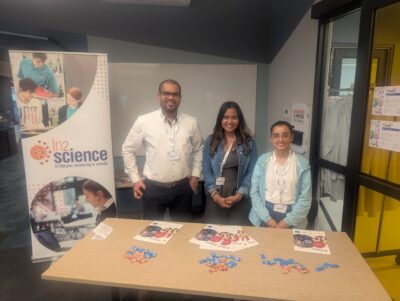
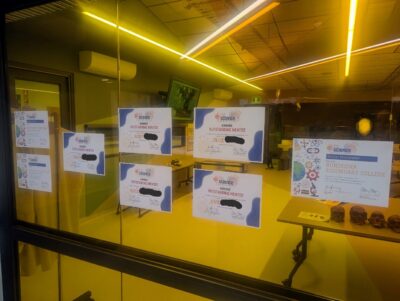
Once again, In2science were lucky enough to be invited to participate in Bundoora Secondary College’s Open Night. Bundoora SC have been an In2science partner school since 2007, and last year their teachers and students were winners and nominees at our annual awards night. It was lovely to see these certificates proudly on display at Open Night!

Three of our mentors currently placed at Bundoora Secondary College joined me on the night to talk about In2science and what it had to offer students in STEM classrooms. We were excited to have our table set up in the College’s brand-new science building! The teachers and students had worked tirelessly in the week leading up to Open Night to set all the equipment and furniture back up in its new home.

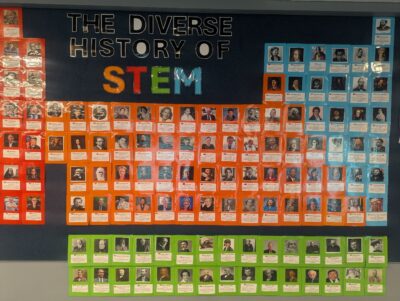
Jayanti, currently studying her Masters of Laboratory Medicine at RMIT University, joined me on the night. She has been working with year 8-10 students in the STEM Club and has assisted them in putting together a periodic table of The Diverse History of STEM. This amazing piece of science art was on display at Open Night (pictured below). It depicts many of the scientists credited with STEM discoveries over the centuries. It’s very impressive, don’t you think?

Over the course of the evening, Jayanti, Lakshan, Nishadini, and I spoke to many prospective parents about the In2science program and the exciting prospect of having a university student mentor in one of their child’s STEM classes. We also spoke to many of the students, finding out it they liked science and maths and what they enjoyed about it. You can imagine the fun answers and conversations we had with them! I cannot confirm or deny if Mentos were used in any bribery!
If you are interested in having an In2science mentor in your classroom, please reach out to our Program Manager at [email protected]. We are currently recruiting, interviewing and training a fabulous cohort of mentors ready for semester 2, so email us today!

Exploring the Unknown World: A Day of Immunology

By News

By Thisanja Cooray, Masters of Biotechnology and Bioinformatics student at La Trobe University and current In2science eMentor.

Last month, the La Trobe Institute for Molecular Science (LIMS) and the Australian and New Zealand Society for Immunology Inc. (ASI) hosted a Discovery Tour of infection and immunity at La Trobe University. This was a great opportunity to show my In2science mentee, Rhiannon, a peek into how scientists work to find better solutions to fight new diseases. Rhiannon is a curious student – we had amazing In2science sessions, delving into the different realms of science, from cell biology to viruses, during our meetings.

I remember my school days during science field trips, I would be thrilled to find out there was some hands-on experience and interesting science to hear about. Now looking back on it, I can see how this has inspired me to consider taking science at university. So, when the opportunity came about, I immediately contacted my coordinator Dr Tahnee Saunders and put the message out in hopes that my mentee would join in me in an adventure.

Stepping into La Trobe’s Labs

We first sat down to hear Dr Emma Grant’s interesting talk on her work about the Bird Flu. It was a fantastic opportunity for Rhiannon to hear from a great scientist! I was particularly very excited when I found out there was some hands-on activities in the labs as this would help to show real-life lab techniques and foster confidence in STEM.

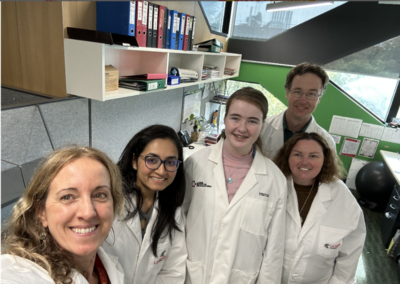
Everyone was sorted to different groups; our group leader was Professor Begoña Heras, another amazing scientist who guided us through all the sections of the labs. Our first stop was the world of Microbiology, where we went through bacterial and fungi plates that originated from a variety of places, all the way from rivers to someone’s shoe – some of them glowing like the sunset! They were fascinating species, some beneficial to the world, such as those used in insulin production, and others less so.
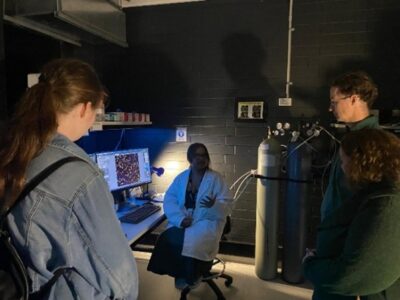
Then we headed into another lab, geared up in lab coats and gloves, where we got to see cells through a microscope, protein gels, and protein crystallization. Then for the more exciting part – loading an actual protein gel! See what Rhiannon has to say about this experience:

“My favourite part of the day was going into the PC2 lab wearing a lab coat and gloves for the first time. There were a few hands-on activities for me and the rest of the group to participate in. We got to ask the scientists about kidney cancer cells under a microscope. We moved on to the next exciting thing, gel electrophoresis! I got to load a gel to identify what type of protein it was. For that task I used a pipette and a vial containing the different proteins. I was successful at loading the protein into the well in the gel.”

In fact, Rhiannon loaded the protein accurately for the first time!

We also delved into microscopy, from light microscopes to confocal where we observed zebrafish:

“I was taken back by the beating of the zebrafish’s heart, and by the absurdly small size of the creature. I found it fascinating how the zebrafish were transparent for a few weeks. I was also surprised at the size of the labs and university. It had a large range of subjects and was a store of enormous knowledge.”

Why Days Like This Matter

Overall, it was a fun and enlightening experience for not only my mentee but myself as it strengthens my own understanding of science and gives me more appreciation of the research project that I am currently doing for my final year of Masters at La Trobe.

I think it is important for young learners to explore the different sides of science, learn how research has made it into the real world and spark curiosity. Through programs like In2science, this can be achieved. I thank the organisers of the event and my In2science Coordinator Dr Tahnee Saunders for giving me this wonderful opportunity to inspire my mentee.

Stay curious!

From Neurodiverse to Neuroaware: Mentors Upskill with a Neuroinclusive Workshop

By Events, News

On Wednesday May 28, the In2science team and volunteer mentors from our partner universities gathered at beautiful Deakin Downtown for a professional development workshop. Presented by the amazing Dr Rebecca (Bec) Muir, manager of Disability and Neurodiversity Inclusion at La Trobe University, this interactive, fun, and occasionally challenging workshop explored our perceptions of neurodiversity and gave practical advice on how we can all be more neuroinclusive in our day-to-day lives. We asked our fabulous attendees to share their thoughts on the event.
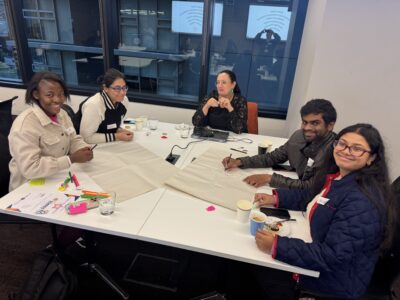
eMentor Gracy Arora from Deakin University, who is currently working with a student from Maffra Secondary College, had this to say about the experience:

“As an international student living in Australia for the past two years, I’ve often found it challenging to truly feel at home. However, during the two-hour neuroinclusion training session led by Dr Rebecca, I experienced a profound sense of belonging and understanding that I had not felt before. The session was incredibly enlightening—it introduced me to concepts I had never encountered and shifted my perspective in powerful ways. Dr Rebecca’s delivery was thoughtful, clear, and deeply impactful. The safe, respectful environment she cultivated made everyone feel seen and heard, and for the first time in a long while, I felt equal and included. Coming from a psychology background, I’ve sometimes struggled to fully grasp how neuroinclusion should be practiced in everyday settings. This session not only clarified those gaps but also gave me the confidence to approach these topics with greater sensitivity and awareness. I walked away with a new language of inclusion and a greater appreciation for the small, often overlooked actions that can make a big difference. It was a truly eye-opening experience, and I am immensely grateful to have had the opportunity to participate.”

La Trobe Masters student and eMentor, also at Maffra Secondary College, Kajanan Sathiyaseelan shared these insightful words:
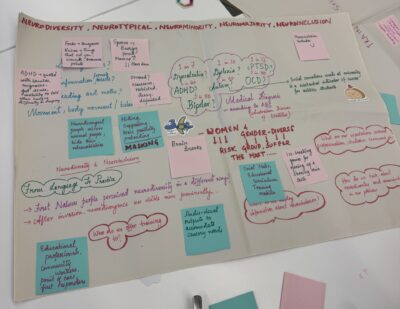
“Looking back, I have learned a lot as an eMentor from explaining science to kids who are hungry for knowledge to being their friend and sharing my struggles as a neuroatypical person in my academic journey. I had the amazing opportunity to attend a lecture by Rebecca Muir on neurodiversity. She broke down the phobia that society often holds about neurodiverse people. What they really need is love and support from fellow humans, along with a safe space to express themselves and just be themselves. Inclusion is a simple step. We need to stop fearmongering, start loving, and treat everyone as our fellow humans. As a neuroatypical person, I understand the struggles of those who share my spectrum. Be the change.”

Emma Iacuone, also from La Trobe University and mentoring at Epping Secondary College, offered her thoughts:

“I had the amazing opportunity to attend the ‘Neuroinclusion in practice and language’ workshop presented by the lovely Dr. Rebecca Muir! I got to meet with other mentors and eMentors from the program, where we learnt together about neuroinclusive language, and what being neuroinclusive in a classroom setting can look like. The biggest idea I took away from the workshop was that each person has different needs, and that when I am in the classroom, it is a good thing to ask all students about what they prefer. This reduces the assumption that neurodivergence is uncommon, and I can change how I share information or explain concepts to students with different learning styles. I felt the workshop atmosphere was extremely supportive, fun (I learnt how to fold an origami chatterbox!), and informative. I wanted to say thank you to the In2science team for the opportunity to be a part of this workshop!”

Lenny Zhang, an eMentor from The University of Melbourne mentoring at St John’s Regional College, said the following:

“As someone who hates stepping out of their comfort zone, pushing myself to come to this workshop was a challenge although I knew it was going to help me to expand my knowledge in an unfamiliar field. However, this challenge took me by surprise. I had learnt knowledge, theories and ideas that I was unprepared for yet desperately needed. As a psychology student, I have often heard of the words neurodiverse and neurodivergent, but I never understood the difference between them. I also felt a deep connection with the cutlery theory, which articulated why we may react differently to the big and small stressors in everyday life. I felt welcomed, accepted and respected. Small fidgets were provided that could suit people’s learning needs, as some of us, such as me, learn better with a certain level of “distraction”. We were given multiple breaks to refuel our bodies and let our concentrated minds rest. Before we knew it, Dr Rebecca Muir has made the workshop more than a classroom that taught us about neurodiversity, but also a place that demonstrated how to create a safe space that respected the differences between people.”

One of our favourite aspects of In2science is being able to give back to our hard-working and committed volunteers with these exceptional professional development workshops. Our mentors learnt so much from Bec and have upskilled not only their mentoring, but their everyday interactions with diverse people. We would like to extend a heartfelt thank you to Bec for running this fantastic workshop sharing her extensive knowledge about becoming more neuroaware!